
The Big Ideas
To get a deal, you have to offer both sides that any loss will be accepted as a long-term gain. This is especially true if it’s a case of two sides of the same coin, i.e., parents with assets and their children on low/median labour income.
So, first of all, ‘frame’ the argument with a report like the Beveridge report of 1942, which uses a simple x-point list.
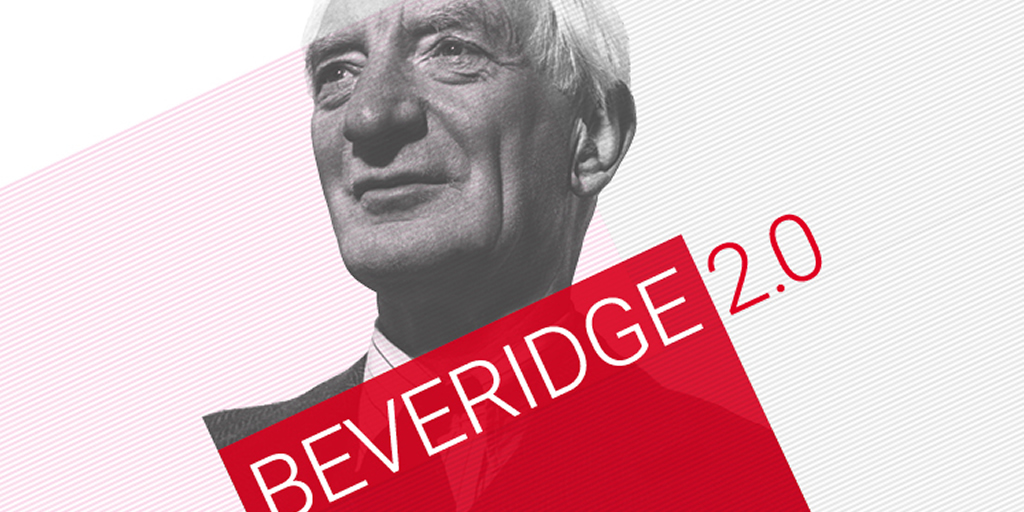
My suggestion is;
The Five Giants of the 21st Century
Care, Education, Home, Income, Retirement.
Care: Early child care (2-5), free at the point of need
Education: Further Education, free at the point of need
Home: Affordable on average incomes/de-commodified, fair rent
Income: Unemployment by government job schemes and average income-related unemployment payments. An actual safety net.
Retirement: Elderly care is free at the point of need, and all care homes are nationalised like the original NHS of 1948.
The Carrot
- Government to fully fund education from early child care (Age 2) to higher education/apprenticeships (inc Masters level, maybe PhD).
- Government-funded house building (no poor doors) for social rent and purchase, mixed development.
- Unemployment: Government work schemes allow nobody to be unemployed. Based on minimum wage as well as unemployment benefit
- Universal Benefits, not selective means testing
- Fully funded nationalised elderly care, including day centres based on the original NHS model.
This has been the Nordic model for the past 60 years. (Lakey, Partanen,
Booth, Hilson)
The Stick (more work is needed on this, but an outline)
- Land monopolists to no longer profit from doing nothing. (Churchill)
- Land Value tax (LVT) after all land is registered ( not been completed since
1087) (Shrubsole). - Any refusal, compulsorily purchased at the 2010 rate (note; the Attlee
the government did the same in 1945-51 but offered 1939 values for
compulsory purchase for ‘new town’ land) the land then
purchased and turned back to the commons for rewilding of common land
or rented to local farmers (Council Farms). (Shrubsole) - High taxes on 2nd homes (LVT), buy-to-let, again with government
purchase offered as an exit strategy for small buy-to-let owners wanting to
get out of the market (quid pro quo). - Mortgages are taken back to pre-1971 (CCC Act) building societies (not banks)
with 12% minimum reserves, 4 times max single income, 3 times combined,
over 25 years max for repayment, 5-10% deposit. Variable interest rates, based
on a window around BOE base rates. - All retail banks will no longer be able to gamble on the stock market (pre
1986 Big Bang), therefore lending to local businesses for revenue (pre-1986
and 71), more local banks as in Germany, so break up the big 4 (Werner).
Obviously, this is a very basic summary, but the point is that pre-1970, local average income dictated the price of a house, not free market speculation based on created scarcity.
Note; post-November 2024, new post for up-to-date post the completion of a Research Masters ideas and theories of 2 years research, a lot more meat to be added to these bones of an idea
Consequences; Cutting the Apron Strings

The idea is that if you don’t have to worry about childcare, education, housing deposit and purchase/rent, unemployment, and most of all, retirement and possibly going into a home, then the need to ‘save for your retirement’ is no longer an issue, so you don’t need an inflated housing market. (Lakey, Partanen, Booth, Hilson)
“From a social perspective the children are no longer dependant on the parents asset wealth, ie cutting the apron strings. Conversely the parents are no longer dependant on their children for elderly care and the ensuing arguments, avoidance scams and possible elderly abuse due to selling ‘their inheritance” (Lakey, Partanen).
Note: A progressive higher inheritance tax will keep a narrow wealth gap.
If you have money to invest, then a green wealth fund and/or bond, the stock market as per usual…but not land! (Ryan-Collins, Lloyd, Shrubsole, Werner)
This is based on the Nordic model, notably Norway, Sweden, and Finland. They are all funded, with a low GDP to money spent in the economy ratio because the Nordics don’t have to worry about oversized price tag items; they can just get on with what is essential for a country’s growth, innovation, time to develop outside of work (i.e., no second job), and taking risks without the fear of losing everything if unemployed, ill, or business failure.
All those pursuing new ideas need the freedom to fail (Lakey, Partanen, Booth, Hilson).
 It's about people, stupid...