Hiding in Plain Sight

Featured

The best tactic for hiding the biggest scams.

Overview

This post came about when I realised that sometimes it’s better to communicate a concept using fiction and games rather than the often dull route of academia that few ever read. The game was obvious, but the book came from a green flash of inspiration; on further research, I found I was on the right track. This further led to why and what the authors’ ideas were promoting. Below are some explanations and further thoughts on why these ideas from 1900 are more relevant than ever.

1900; the same issues as the 2020s

Suppose an idea or concept is large enough to become a norm, accepted by society by familiarity, and eventually a cornerstone of societal norms.

In the late 19th and early 20th centuries, two people noticed two norms that did not seem to add up: one was a playwright and journalist, and the other was an inventor, poet, engineer, and journalist.

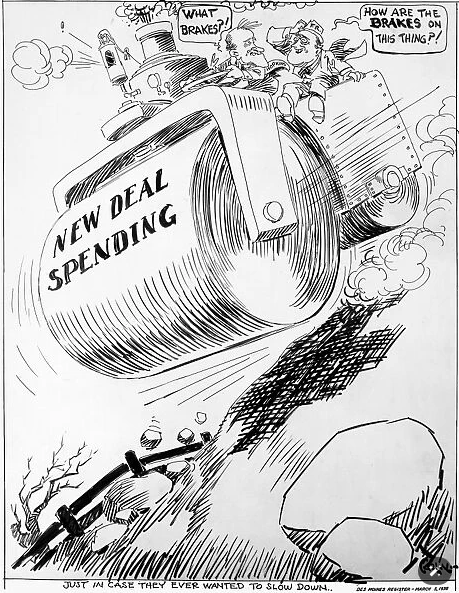
Both saw an issue with money in its creation and use. One used a children’s book as an analogy to the money system, the other a children’s game in which the goal was to bankrupt all your opponents.

Both became classics and remain so to this day. The analogy behind both has been lost, but the truth of their criticism remains in plain sight.

If you have yet to guess, the children’s book is The Wizard of Oz, written by Lyman Frank Baum (1856 -1919), first issued in 1900 in the US.
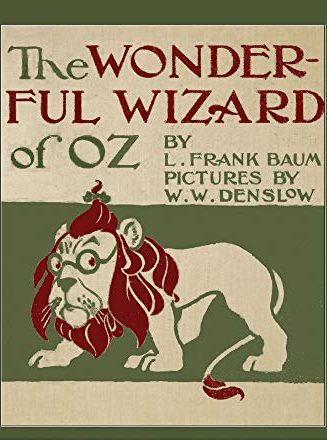
Original book cover

The game is a board game called The Landlords Game, invented by Elizabeth J. Magie (1866 -1948) in 1903, later to be renamed (ironically) Monopoly by James Darrow, who sold the rights to Parker Brothers, who gained the monopoly of the game in 1935 (also paying E. Magie a paltry $500 for the copyright of The Landlords Game)
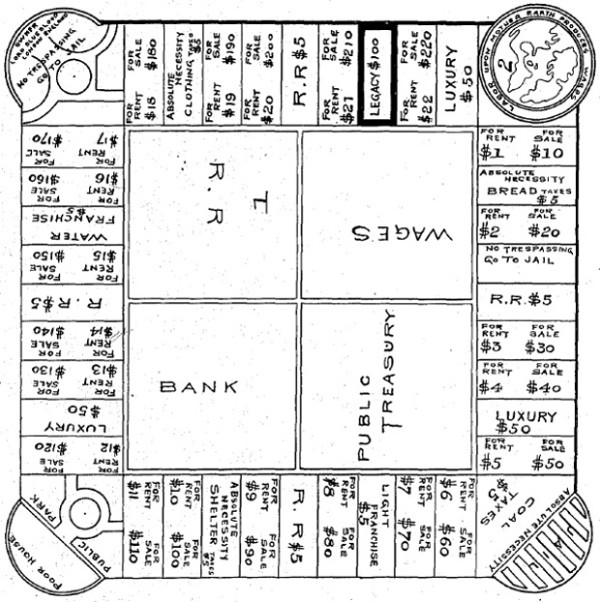
An early concept

Unveiling the Truth about Rent Control and Land Values in Housing

Featured

Further analysis of where Vicky didn’t go!

A great interview with Housing journalist and author

My comments on the interview and replies to other’s comments are in parts two and three.

I’ve been researching housing unaffordability for seven years and am about to start writing a dissertation on Rent Control (℅ Dr Anna Minton). After all these years of trying to find solutions, the elephant in the room is Rent Control. Why?

This is a disappointing and slightly dull answer, but it’s one of the keys that has unlocked many doors for working—and middle-class people who don’t want to spend 30-50% of their income on a 40-year mortgage or rent to a landlord.

Some of the main authors to thank for this conclusion are John Doling (tries to be neutral), Danny Dorling (left), Nick Bano (left), Kemp (right), and Christine Whitehead (LSE, right). It is always good to see if there is a counter-argument of value—there isn’t.
(As well as Smith, Ricardo, Marx, Keynes, Piketty, Blyth, Mazzucato, Christophers, Kelton, Richard Murry and Minton)

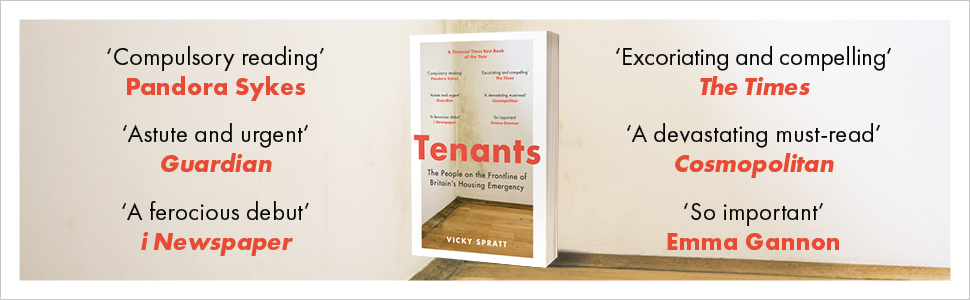
Her Book, Tenants

Why? An example: I’m a former bricklayer who ran a business in construction, so I know about house building pricing. My humble little flat;
In 1994, it was purchased for £47,700 with a floor area of 42m². In 1994, it cost £600 per m² to build, thus £25,200 to rebuild. Therefore, 53% build/47% land value = £47,700.

The killer point: in the 1950s, land values of new builds dropped to 3%. Based on those values and present-day build values (£2K per/m²), my flat would be on the market for £86,600, which equates to 2.4 times the full-time national average income (£35K). 2.4 times was also needed in the 1950s-60s for a single average income to buy an average 2.5-bed semi (.5 being the box room).

Managing Finite Resources: Unveiling the Truth about Money

Featured

Why the great ‘gotcha’ question is the wrong question

Introduction

Back in 2017, I started looking at the housing issue and, in my naivety, started with ‘just build more houses’ to solve the issue of Economics 101 that is, if there is a shortage of supply, then the price will rise, reflecting that scarcity, if we build more then creating a surplus the price will fall. Concerning money needed for such investment from the centralised government of the day, I soon encountered the age-old question when it comes to spending money;

I’d reached a dead end before I’d even started! If I/we couldn’t pay for ‘it,’ whatever solutions I found would always be scuppered by this universal ‘gotcha’.

So then followed a dive into the economics of money, not what to do with it once we have it (which is a political and ideological choice) but where it comes from;

  • Is it tax revenues?
  • Is it government borrowing from banks via government-issued savings bonds?
  • Is it gold reserves?
  • Who are we actually in debt to?
  • And if we paid it all back, would we have any money?

In this blog entry, I will explain why finding ‘the money’ has never been the issue. The real issue is our natural finite resources, both from planet Earth and from us humans who inhabit it.

So, to save time, I’ve divided this into short chapters relating to page numbers. I recommend reading the whole article, rereading areas that are initially hard to comprehend, following links, and asking questions in the comment section. This article will evolve with feedback. It has taken me 7 years to understand this, so don’t worry if, at first, it all seems too hard to understand—it’s a paradigm shift.

This is a very brief overview. See recommendations in the Conclusion for further reading and viewing.

Chapter One, Page 2: What is money?

Chapter Two, Page 3: What about ‘The National Debt’?

Chapter Three, Page 4: So what’s stopping the government from creating more money

Chapter Four, Page 5: If the government can create money, why does it borrow it?

Conclusion, Page 6.

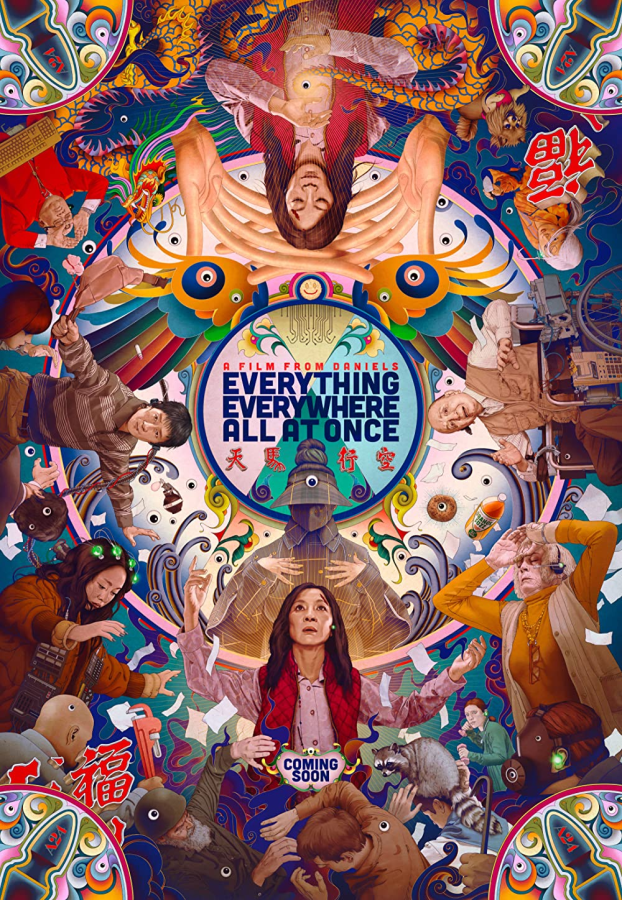
Exploring the Multiverse of Decisions: A Review of ‘Everything, Everywhere All at Once”

A surreal journey through a multiverse of decisions made by one character, reflecting on the concept of co-existing multiverses in different places and times.

The Movie

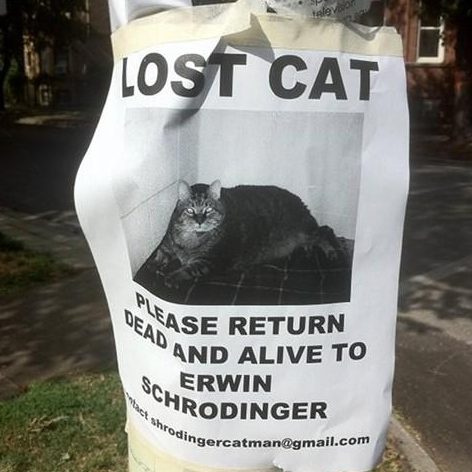
The movie “Everything, Everything All at Once” is definitely surreal in its format, jumping all over the place to communicate the idea of the multiverse of decisions made throughout one’s life. This movie focuses on one character’s journey; each individual since the beginning of time itself has a unique multiverse of decisions and consequences, according to quantum theory of co-existing multiverses in different places and times, but are only fixed when observed (ie the thought experiment of Erwin Schrödinger’s cat)  .

Thus in the end it was entirely about the universe she wanted to reside in, which was not repeating the mistakes (as she saw them) of her parents, that due to her own hurt and stubbornness she was in fact repeating,

Thus the nub of the movie, the chance to see and experience the results of infinite ‘what if’s’.

The mundane start, with everyday pressures of balancing time, money and family of just one person in the billions alive in the present, (let alone the past and future), further enlarges (to our limited imagination) the infinite size of the multiverse she was about to cross. 

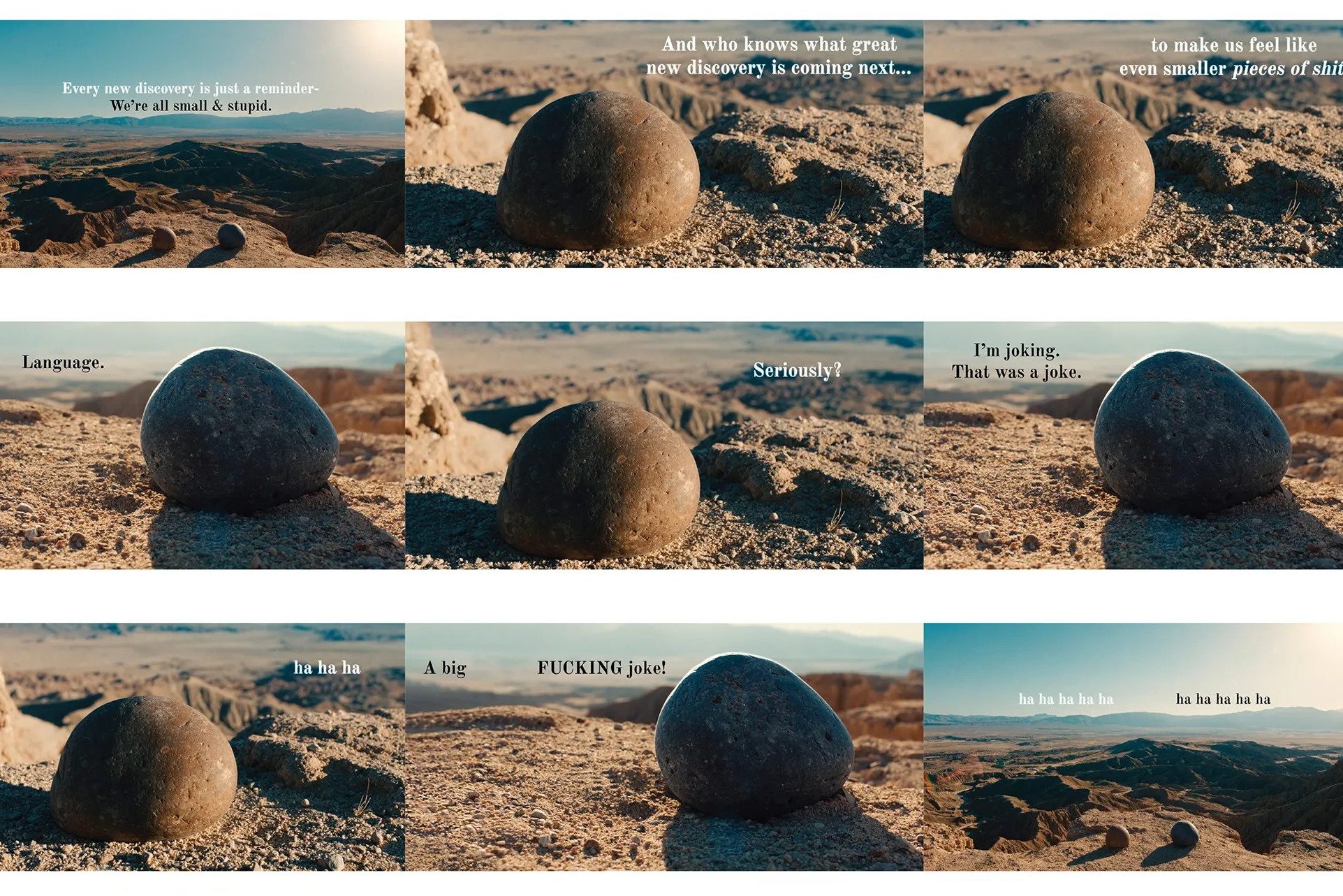
What if – We Were Rocks?

All the actors in her world remained, as it was her world, thus ours would have different influencers and actors to play out our story. She was in fact and would always be the hero of her own journey (ie messianic). The idea of enlightenment was explored by the husband she always wanted, but later realised why she married the man she did, namely to balance her initial fast thinking primary reaction (ref; Kahneman ‘Thinking fast and slow’) to fight like a dragon mother that Chinese women in their 40’s are often stereotyped as being. But this has nothing to do with the other characters, it’s purely her story with everything circulating around her, within her universe, everyone else is an actor responding to her decisions, reminds me of the hard to follow, but brilliant movie “Synecdoche, New York,” directed by Charlie Kaufman, an incredibly surreal journey into the life, times and draining disappointments of a playwright, who has the opportunity to write, direct, produce and star in his own play entirely about himself, gradually realising the futility of it all and life’s simple but often consequently devastating decisions, acted out before him.