Hiding in Plain Sight

Featured

The best tactic for hiding the biggest scams.

Overview

This post came about when I realised that sometimes it’s better to communicate a concept using fiction and games rather than the often dull route of academia that few ever read. The game was obvious, but the book came from a green flash of inspiration; on further research, I found I was on the right track. This further led to why and what the authors’ ideas were promoting. Below are some explanations and further thoughts on why these ideas from 1900 are more relevant than ever.

1900; the same issues as the 2020s

Suppose an idea or concept is large enough to become a norm, accepted by society by familiarity, and eventually a cornerstone of societal norms.

In the late 19th and early 20th centuries, two people noticed two norms that did not seem to add up: one was a playwright and journalist, and the other was an inventor, poet, engineer, and journalist.

Both saw an issue with money in its creation and use. One used a children’s book as an analogy to the money system, the other a children’s game in which the goal was to bankrupt all your opponents.

Both became classics and remain so to this day. The analogy behind both has been lost, but the truth of their criticism remains in plain sight.

If you have yet to guess, the children’s book is The Wizard of Oz, written by Lyman Frank Baum (1856 -1919), first issued in 1900 in the US.
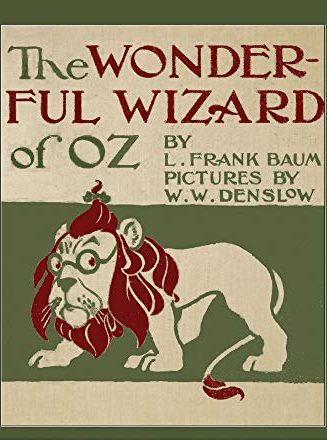
Original book cover

The game is a board game called The Landlords Game, invented by Elizabeth J. Magie (1866 -1948) in 1903, later to be renamed (ironically) Monopoly by James Darrow, who sold the rights to Parker Brothers, who gained the monopoly of the game in 1935 (also paying E. Magie a paltry $500 for the copyright of The Landlords Game)
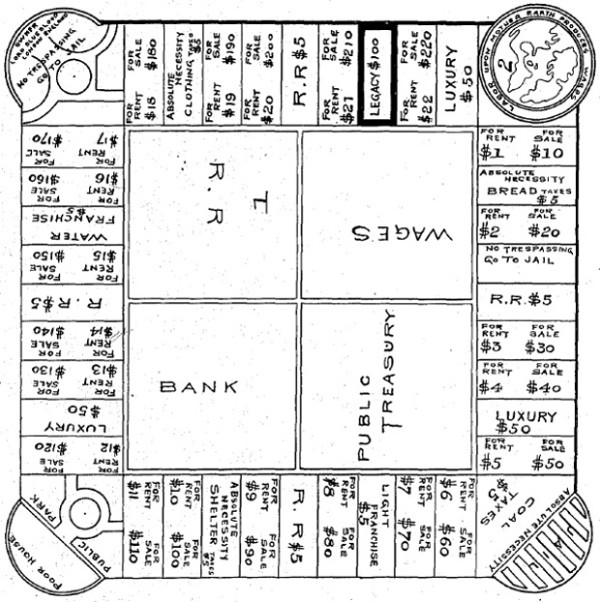
An early concept

Managing Finite Resources: Unveiling the Truth about Money

Featured

Why the great ‘gotcha’ question is the wrong question

Introduction

Back in 2017, I started looking at the housing issue and, in my naivety, started with ‘just build more houses’ to solve the issue of Economics 101 that is, if there is a shortage of supply, then the price will rise, reflecting that scarcity, if we build more then creating a surplus the price will fall. Concerning money needed for such investment from the centralised government of the day, I soon encountered the age-old question when it comes to spending money;

I’d reached a dead end before I’d even started! If I/we couldn’t pay for ‘it,’ whatever solutions I found would always be scuppered by this universal ‘gotcha’.

So then followed a dive into the economics of money, not what to do with it once we have it (which is a political and ideological choice) but where it comes from;

  • Is it tax revenues?
  • Is it government borrowing from banks via government-issued savings bonds?
  • Is it gold reserves?
  • Who are we actually in debt to?
  • And if we paid it all back, would we have any money?

In this blog entry, I will explain why finding ‘the money’ has never been the issue. The real issue is our natural finite resources, both from planet Earth and from us humans who inhabit it.

So, to save time, I’ve divided this into short chapters relating to page numbers. I recommend reading the whole article, rereading areas that are initially hard to comprehend, following links, and asking questions in the comment section. This article will evolve with feedback. It has taken me 7 years to understand this, so don’t worry if, at first, it all seems too hard to understand—it’s a paradigm shift.

This is a very brief overview. See recommendations in the Conclusion for further reading and viewing.

Chapter One, Page 2: What is money?

Chapter Two, Page 3: What about ‘The National Debt’?

Chapter Three, Page 4: So what’s stopping the government from creating more money

Chapter Four, Page 5: If the government can create money, why does it borrow it?

Conclusion, Page 6.