3) And if, as you say, 70% of the cost of a house is land, then the only fix needed is to make more land available in places where people want to live. So that’s a planning permission issue.
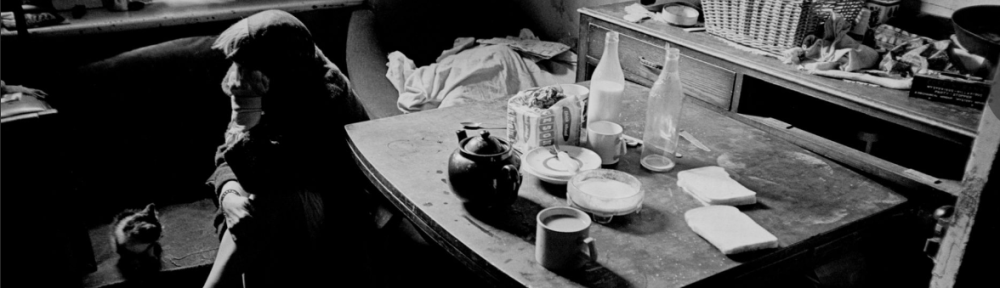
I think you have missed the point: there was a housing shortage in the 1950s, yet an average single-income household could afford to buy an average house. This is what sparked all my research, as, like you, I thought the classic, ‘well, just build more houses.’
The difference was that in the 1950s, housing was NOT a financial commodity; it was pointless for a speculator to enter the market because it was tightly controlled. Better to invest in commercial property (which they did) and/or stocks and shares.
Namely, as stated, the scarcity of economics 101 was not land, but rather the need to be granted a mortgage, so why didn’t mortgages inflate? Because they were regulated and fixed to government-set interest rates, the variable in this case wasn’t money but time; thus, you sometimes had to wait for the government to allow the Mutual Building societies to create new money. Again, this relates to controlling inflation by money supply rather than interest rates; it was known as the Stop/Go policy.
Now, in 2026, the Bank of England’s interest rate policy determines debt values, meaning that only the debtor feels the pain, not the lender.
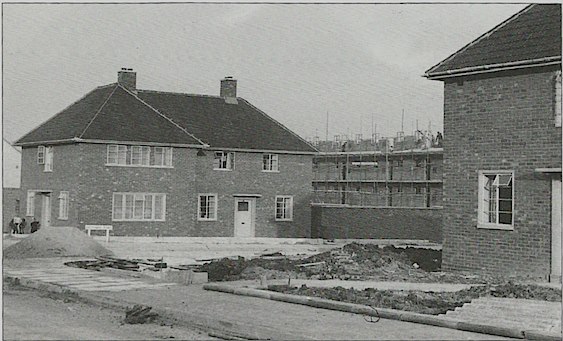
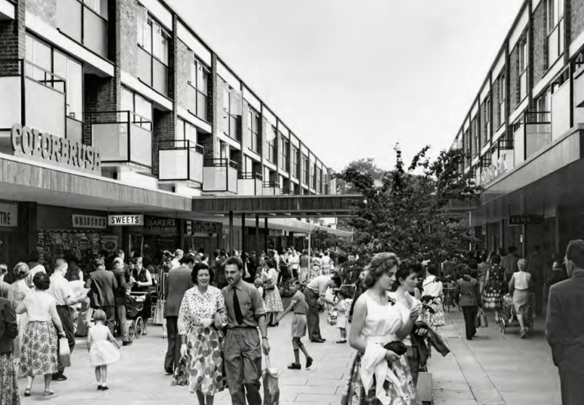
As land values crashed, the government purchased land for new towns in three phases. Phase one, 1946-49, is the one we most refer to, though the final and arguably most successful is Milton Keynes in the third phase, due to its size and thus its ability to sustain an internal economy, whereas most of the others became satellite towns.
The best, in my opinion, and first is Stevenage, especially the adjoining park.
It’s having ‘a plan’ over a planning issue, if you get my point.
4) Also, I looked down your list. Your 9 years of research covered a lot of ground – the mistake was to treat this as a political problem to be micromanaged. It’s not; it’s an economic problem to be incentivised.
If only it were one mistake! Ha, ha. There were many, and some I’m still resolving, as after all, it’s a process.
Again, your reaction is fair and just on the face of it. If I were able to vote in 1979 (I was 15) I would’ve voted for Thatcher as the ‘planned economy’ had seemingly come to a grinding halt and as you put it an incentivised option of free market economics that you are reffering to was like a breath of fresh air, the promises of individual freedoms over collective responsabilties to people on council estates and striking working class workers seemed ‘fair and just’ as an entrpenural family of builders.
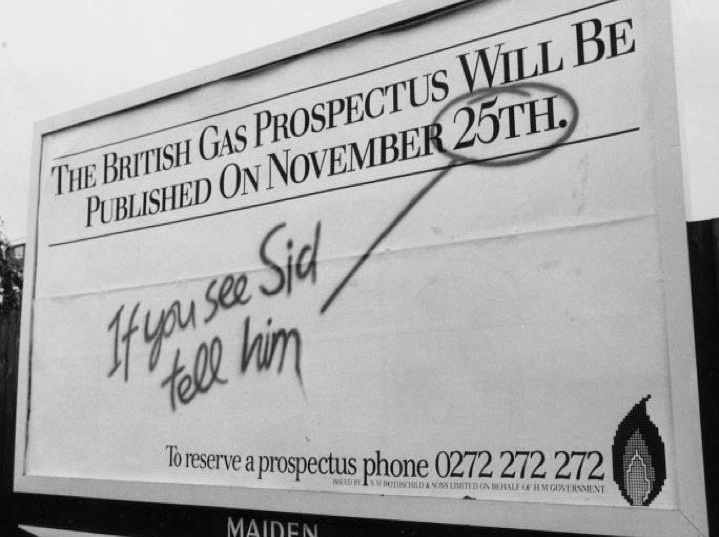
And at the beginning, especially with the selling off of so much family silver that had been paid for by public money, there was a boom (i.e., council housing, BT, Gas, Electricity, later Rail, North Sea oil squandered, etc.), but you only sell the family silver once!
An overly planned economy leads to a dictatorship of the right (Nazi) or the left (Stalin), and a complete hands-off approach (which is the neoliberal economy you are referring to) leads to immense inequality and actual or near revolution, i.e., France 1789 and Victorian England.
So the unfashionable reality is a mixed economy (a political and economic choice) with regulated Capital, Land, and Labour markets, each left to do what they do best, but regulated so they cannot harm the majority. Thus, the less-than-perfect Nordic economies. (ref: Viking Economics by George Lakey).
All economic and political systems are in constant flux; the variables are often discoveries in new tech, environmental issues, and population growth/shrinkage. Each generation does what they see as best, hopefully not being locked into recency bias, meaning they quote TINA (there is no alternative) and forget to look to the past to see if there are any lessons to be learned and how they can be adapted to their society.
That is why we constantly have to remind ourselves of what existed in the past, both good and bad.

Final thoughts
I have a lot of hope from talking to and teaching many young people; our job is to make sure they have the information to use, the wisdom to judge, and, if they so choose, to enact.
All we can do is plant the seeds of a tree whose shade we will never experience.
Thanks for your comments, happy to continue the conversation, but I would rather see action to expel TINA.
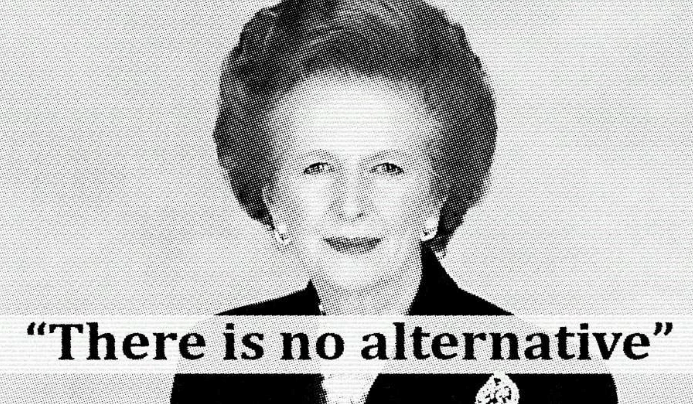
There is!

