Managing Finite Resources: Unveiling the Truth about Money

Featured

Why the great ‘gotcha’ question is the wrong question

Introduction

Back in 2017, I started looking at the housing issue and, in my naivety, started with ‘just build more houses’ to solve the issue of Economics 101 that is, if there is a shortage of supply, then the price will rise, reflecting that scarcity, if we build more then creating a surplus the price will fall. Concerning money needed for such investment from the centralised government of the day, I soon encountered the age-old question when it comes to spending money;

I’d reached a dead end before I’d even started! If I/we couldn’t pay for ‘it,’ whatever solutions I found would always be scuppered by this universal ‘gotcha’.

So then followed a dive into the economics of money, not what to do with it once we have it (which is a political and ideological choice) but where it comes from;

  • Is it tax revenues?
  • Is it government borrowing from banks via government-issued savings bonds?
  • Is it gold reserves?
  • Who are we actually in debt to?
  • And if we paid it all back, would we have any money?

In this blog entry, I will explain why finding ‘the money’ has never been the issue. The real issue is our natural finite resources, both from planet Earth and from us humans who inhabit it.

So, to save time, I’ve divided this into short chapters relating to page numbers. I recommend reading the whole article, rereading areas that are initially hard to comprehend, following links, and asking questions in the comment section. This article will evolve with feedback. It has taken me 7 years to understand this, so don’t worry if, at first, it all seems too hard to understand—it’s a paradigm shift.

This is a very brief overview. See recommendations in the Conclusion for further reading and viewing.

Chapter One, Page 2: What is money?

Chapter Two, Page 3: What about ‘The National Debt’?

Chapter Three, Page 4: So what’s stopping the government from creating more money

Chapter Four, Page 5: If the government can create money, why does it borrow it?

Conclusion, Page 6.
Exposed;The Big Con

Who really pays for pseudo-public space?

Over the past 40 years, there has been a slow creep of what is known as pseudo-public space. This space is not controlled or maintained by public elected bodies, even though when you walk, drive or cycle through the space, it may at first seem public; after all, you have entered without going through a gate, and there was no signage and anyway, everyone else seems oblivious to its status, so it must be like other public space, like the street outside your front door or the local high street. Turns out it’s not.

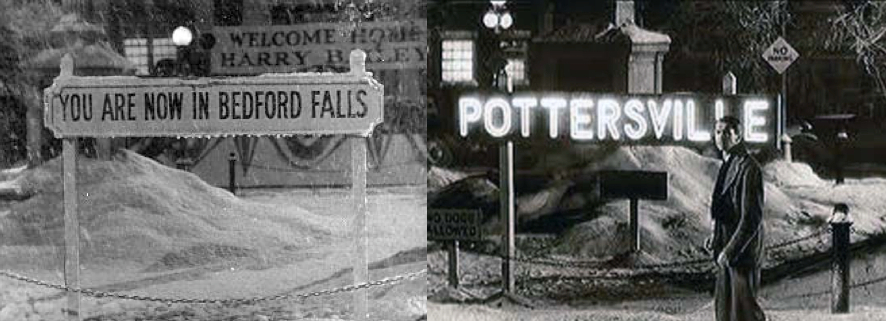
We are no longer living in post-war ownership freehold based Bedford Falls but leasehold to the rentier dystopian Pottersville.

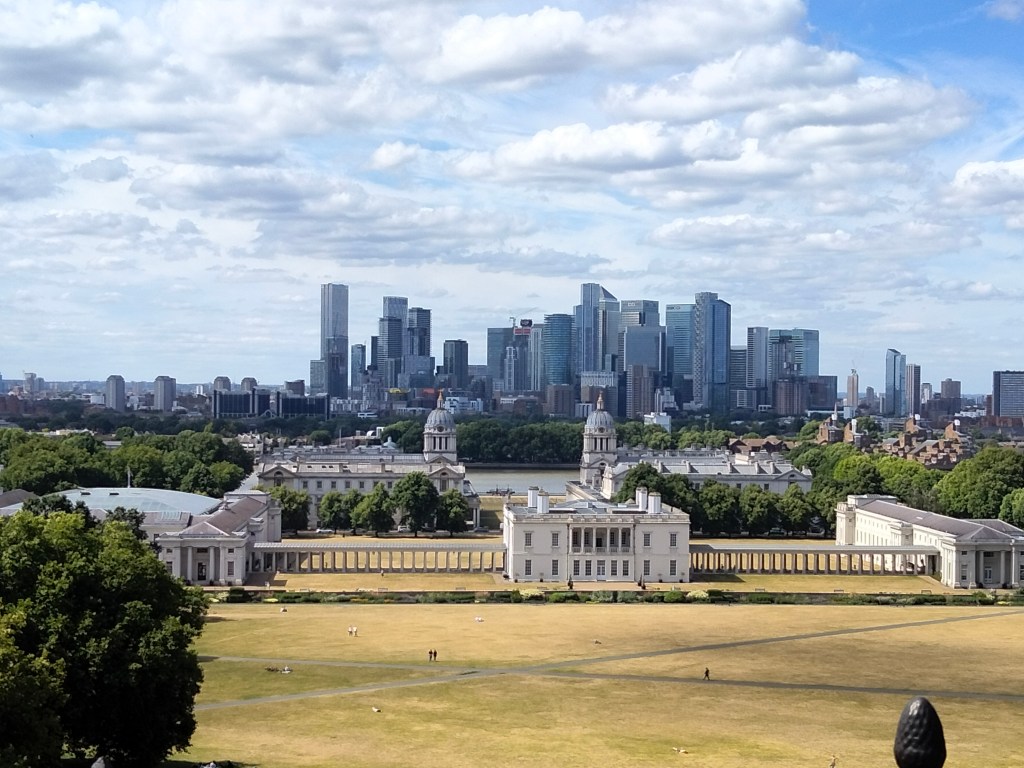
The first example is Canary Wharf, which started this trend. The government of the day had a problem. they wanted to redevelop a declining and abandoned part of a city without spending too much public money. So, a deal was struck between private companies and the central government.

The deal was based on the US idea of the Urban Development Corporation (UDC), which became the London Docklands Development Corporation (LDDC), so the project had no local government or the then Greater London Council (GLC) involvement; they were completely sidestepped. The basis of the idea was that the land would be sold and held in perpetuity as private land, but with public access, all well and good, but the devil, as always, is in the detail; this access was granted as long as the new owners had the right to create their own rules concerning who, when and where access was granted. Again, on the face of it, this seems fair.

Still, it turned out to be pernicious, as decisions were made by the private owners as to the ‘type of person’ who would be welcome, and here is the second and even more powerful rule of self-interest, as the new owners (freehold owners) needed to justify the high rents, which are a combination of ;

1)Ground rent: The property owner (the flat/business premises) does not own the land it was built upon; thus, they are a leaseholder, not a freeholder, and must pay ground rent to the freeholder owner.

2)The service charge covers building maintenance, the concierge, and all other external services, such as the upkeep of the parks and gardens, rubbish clearance, CCTV, and security guards.

Why security guards? This service is needed to justify the high rents/service charges by providing a ‘safe environment’, a conjuncture for getting the right people with money to spend and keeping out those who can not. They are often dressed like the police to make their presence known, which is fine if you fit the correct demographic; if not, you will be hassled by seemingly innocent questions and reminded that you are in a private space, further blurring the lines between private pseudo-public space and actual democratic public space.

Canary Wharf 2020s

The Silent Middle Class

Why the silence in 2023?

Introduction

This post starts with summer background research on the middle class, which helps evaluate the primary content with this newfound knowledge. Then, an obscure, seemingly unrelated programme from Radio 4 that, when deconstructed, goes to the heart of the present denialism by the middle class concerning housing.
The post finishes with broad conclusions leading to further research for workable solutions or just waiting for another bloody war/revolution circa 1914-1945.

Summer reading and prelim for context

Summer reading consisted of subjects as diverse as the History of the Welfare State from 1800 to the Present, Comparative Housing Policy Across Europe and North America, and various criticisms of the supposed ‘Science’ of Economics by various heavyweights in the same field and some books on Agency and Meritocracy, just to add to the mix!

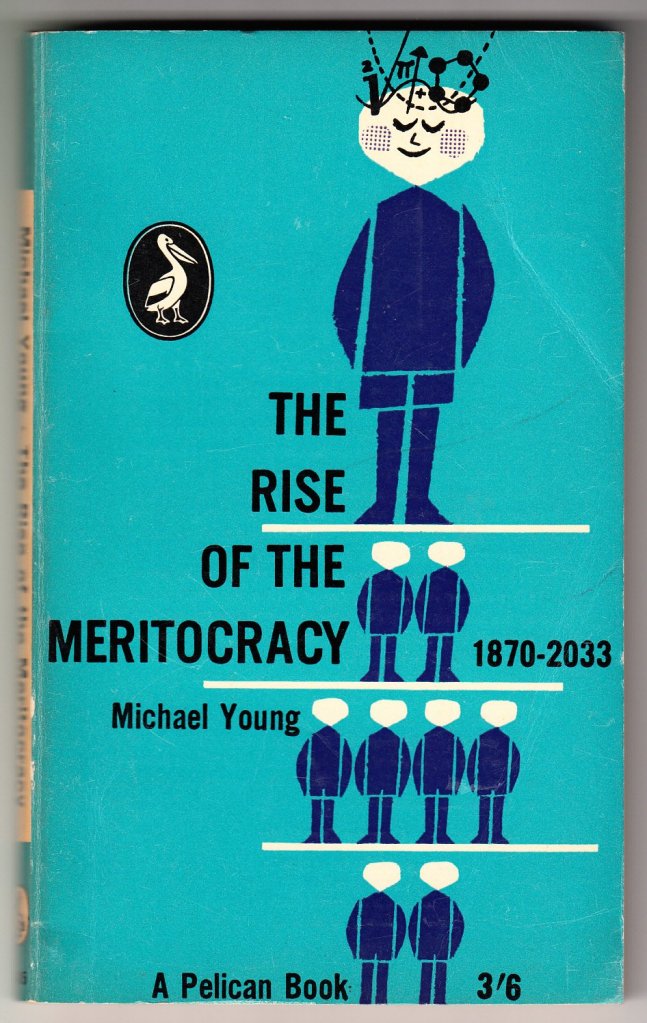
The original dystopian novel that shows the end game of meritocracy, written by the brilliant sociologist Michael Young in 1958, alas this book is sadly out of print.

What has been interesting is the various author’s interpretations of the same historical facts from different political ideologies and philosophical approaches, along with some quoting academics and the great philosophers who were locked within their lived experiences whilst other writers took a broader look from afar with present hindsight and intellectual norms to judge past reactions to circumstance and the cumulative effects of past decisions. Both are valid, though the former can seem more ideological and the latter more self-critical.

I also attended a series of lectures on the British Class System at Cambridge University, with more international post-doctoral students than you could throw a stick at; all shared their thoughts with grace and humility. Their input resulted in some fascinating insights and perceptions of the class system that I wasn’t aware of.
The weekend of lectures and discussion concluded that class is way more fluid and depends a lot on the definitions and parameters used within the time/place as a framework to make judgments. The perception of the British to class is much more nuanced than the US structure of the wealth-based class system, as proven by the comments from the US contingent in the lectures.

View from Madingly Hall, Cambridge.

Piketty; Stirring up the Hornets Nest

Looking at the conjuncture of his research and why it caused such a reaction

Even French economists have an air of the “Nouvelle Vague”

This piece is in response to questions concerning Thomas Pikettys book ‘Capital of the 21st Century’. I’ve read and studied this and his equally thorough book ‘Capital and Ideology’. I don’t pretend to be the last word on Piketty’s writings, and the man can more than defend himself, but what follows are some crucial points to his overall argument. 

Note; when I say conjuncture, it’s in the context of Stuart Hall’s “conjunctural analysis.” Briefly, the subtext of an issue, so for example, ‘benefit scroungers’ as political discourse, as a conjuncture, means we need an excuse for reducing payments for the unemployed so we (the government of the day ) can reduce deficits and grant tax reductions for the demographic of future voters of whom this would appeal. (Hall 2021) (Jefferson 2021)

Anonymous comments concerning Piketty’s Books from the political and economic academic Marianna Mazzucato’s video on her book; The Value of Everything

1- He does not consider the most critical facts, and it lacks historical evidence and contradicts reality.  Its claims appeal to ignorant people with little idea of economic history and financial concepts.  I am not surprised that the presenter relies on such a reference because most of what she says she can’t justify with evidence

2- He claims wealth is passed down from ancestors. He ignores the historical fact that most wealthy people have not gotten wealthy through inheritance. He claims growing inequality is a function of capitalism but ignores all other systems.

 3- Picketty examined the circumstances of wealth in the 19th and 20th centuries and concluded that the 1% owned more wealth than previously. He confuses statistics with individuals, like many people who don’t understand statistics.

Video in question.

Ref; The Housing Crisis is Even Worse Than You Think | Aaron Bastani meets Vicky Spratt | Downstream

At present I’m working on a paper that will be finished by the 26th of April, once completed I will write a timeline for the Video filling in the areas that some may want more information on. As well as the Buy-To-Let Quetion that was left unanswered.

Post 26th I’ll have more info as the area I’m working on is the periods of; 1930-42, 1945-70, followed by 1979 to the present concerning universalist approach to housing/welfare until 1979 then the selectivist approach to housing/welfare.

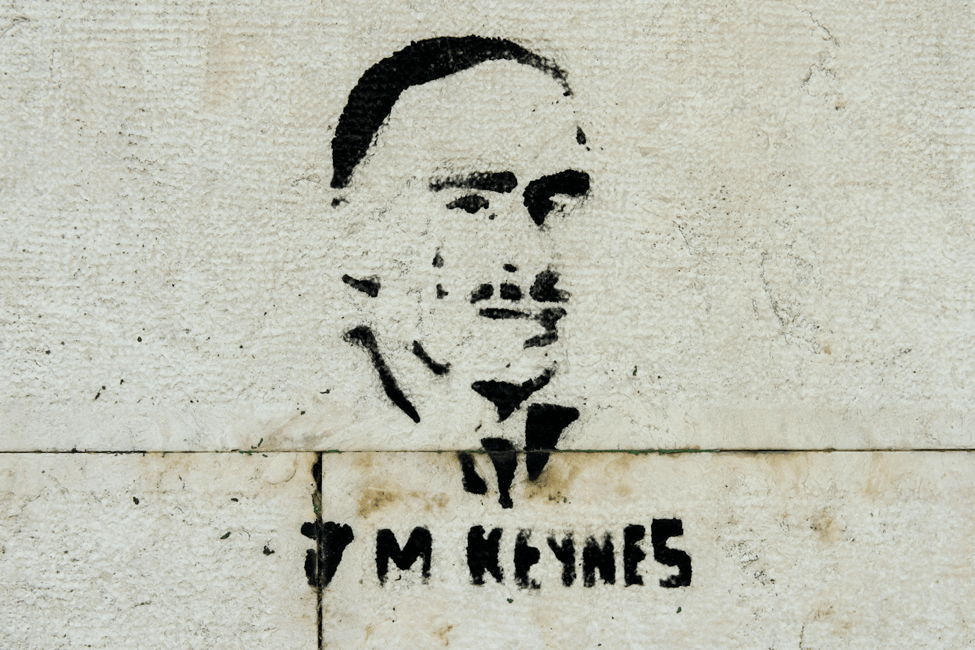
Keynes; The role of Government is to create a society where all can have the opportunity to have a ‘good life’ and not just the few.

Exploring the Multiverse of Decisions: A Review of ‘Everything, Everywhere All at Once”

A surreal journey through a multiverse of decisions made by one character, reflecting on the concept of co-existing multiverses in different places and times.

The Movie

The movie “Everything, Everything All at Once” is definitely surreal in its format, jumping all over the place to communicate the idea of the multiverse of decisions made throughout one’s life. This movie focuses on one character’s journey; each individual since the beginning of time itself has a unique multiverse of decisions and consequences, according to quantum theory of co-existing multiverses in different places and times, but are only fixed when observed (ie the thought experiment of Erwin Schrödinger’s cat)  .

Thus in the end it was entirely about the universe she wanted to reside in, which was not repeating the mistakes (as she saw them) of her parents, that due to her own hurt and stubbornness she was in fact repeating,

Thus the nub of the movie, the chance to see and experience the results of infinite ‘what if’s’.

The mundane start, with everyday pressures of balancing time, money and family of just one person in the billions alive in the present, (let alone the past and future), further enlarges (to our limited imagination) the infinite size of the multiverse she was about to cross. 

What if – We Were Rocks?

All the actors in her world remained, as it was her world, thus ours would have different influencers and actors to play out our story. She was in fact and would always be the hero of her own journey (ie messianic). The idea of enlightenment was explored by the husband she always wanted, but later realised why she married the man she did, namely to balance her initial fast thinking primary reaction (ref; Kahneman ‘Thinking fast and slow’) to fight like a dragon mother that Chinese women in their 40’s are often stereotyped as being. But this has nothing to do with the other characters, it’s purely her story with everything circulating around her, within her universe, everyone else is an actor responding to her decisions, reminds me of the hard to follow, but brilliant movie “Synecdoche, New York,” directed by Charlie Kaufman, an incredibly surreal journey into the life, times and draining disappointments of a playwright, who has the opportunity to write, direct, produce and star in his own play entirely about himself, gradually realising the futility of it all and life’s simple but often consequently devastating decisions, acted out before him.

‘Neoliberalism’ and ‘Capitalism’ – What’s the difference?

A short but thorough explanation by the great cultural and political theorist Professor Jeremy Gilbert who describes Capitalism as an economic practice and Neoliberalism as a philosophy about how societies in which that practice prevails should be managed.

My personal experience of living in a neoliberal world for over four decades has led me to believe that it views and uses the functions of capitalism in a narrow and deterministic way, assuming predictable human reactions to the needs, wants, and desires of everyday life. The microeconomic theory of modeling, as promoted by neoliberal economist Milton Friedman, would be rendered obsolete if we were to incorporate the infinite variables of empathy, love, and charity. By judging humans solely as seekers of utility, status, and wealth, neoliberalism appears more aligned with the mercantile class of the 17th and 18th centuries, which used their ill-gotten wealth to manipulate markets and determine value solely by the final price point, ignoring the actual production costs.

This view of human behavior contrasts with the classical economists, such as Smith, Ricardo, Malthus, and Mill, who recognized the corruption of markets by the mercantile class and developed theories in opposition to this. However, I do not promote classical economic theory but rather recognize that it arose from lived experiences and observations of market corruption.

In addition to market manipulation, neoliberal philosophy often involves lobbying governments, exploiting weaker nations and individuals, and holding the belief that “all is fair in the love and war” of trade. Such practices are prevalent in the current “evil corps” that dominate our lives and harm the planet. Defining neoliberalism solely within the context of classical economic theories is insufficient, as it fails to account for the present reality of corporate-lobbied corridors of government, tax avoidance mechanisms, and exploitation of less capable countries and individuals for the sole purpose of wealth accumulation beyond what is necessary.

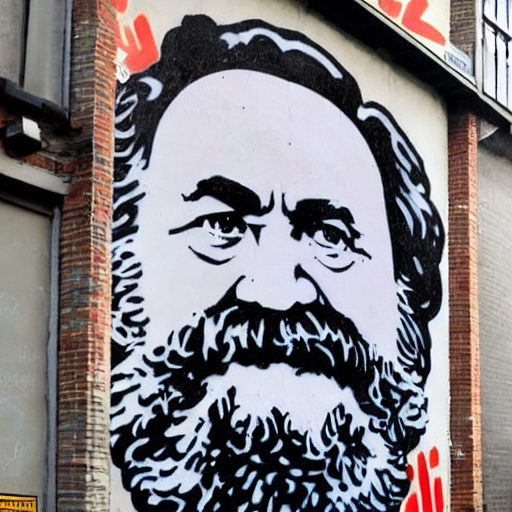
I currently lean towards Keynesian economics, which embraces the idea of uncertainty and a focus on achieving the “good life.” Nonetheless, I acknowledge the relevance of Marx’s critique of capitalism, particularly concerning the exploitation of surplus value.

“Please read below to see the difference between an angry amateur and a nuanced professional”.

jemgilbert's avatarjeremygilbertwriting

I wrote this in response to a discussion  of this theme on the NEON list. Thinking it was both too long for an email list and might be a useful resource for some people, I posted it here…
What’s the difference between ‘neoliberalism’ and ‘capitalism’ 
I think that neoliberalism and capitalism are simply different types of thing.

View original post 1,369 more words

What actually is the point of the Private Rental Sector (PRS)?

The Housing Act of 1988 deregulated new lettings to encourage the PRS to return, 44 years later the potential for 1910 rent strikes of pre The Rent Control Act of 1914 look like they may return.

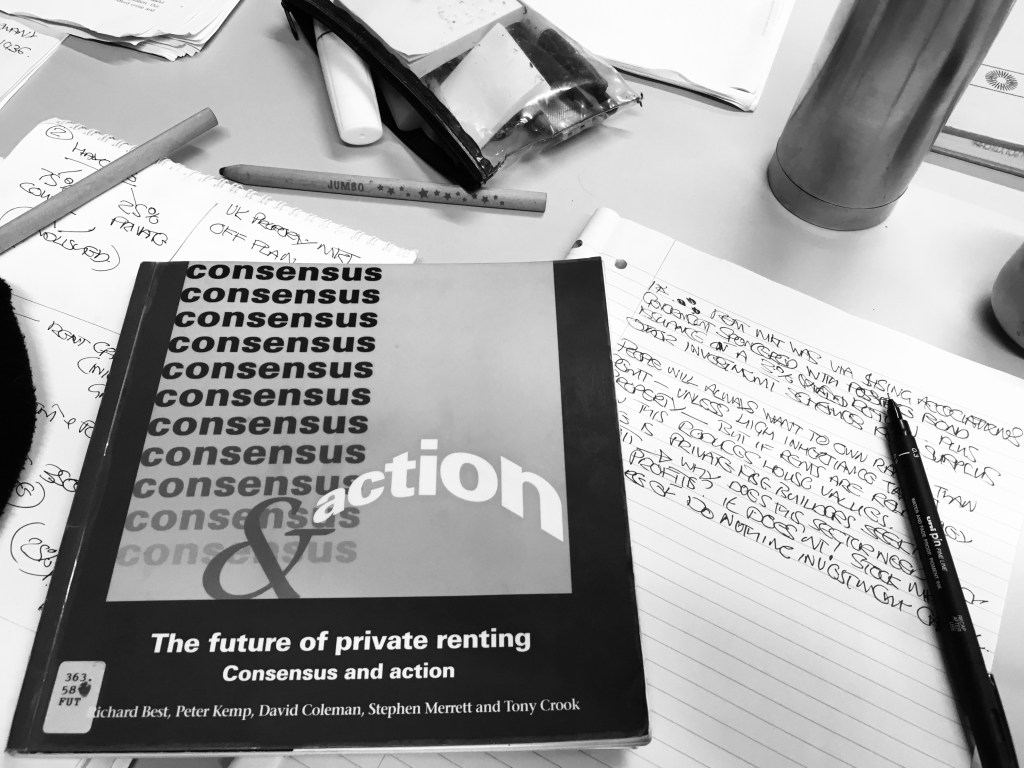
Sitting in the library, grinding my way through various papers and journals on Rent Control (RC), I started to read a report from the much admired Joseph Rowntree Foundation (JRF) published in 1992 with various academic, housing pressure groups, practitioners and financiers together with advisors to politicians from different parties all contributing to the discussion. So far so good, but…..

The book in question amongst my usual chaos

Two issues of cognitive bias became increasingly apparent, both of which we all suffer from as emotional beings, so I’m not specifically criticising the authors of the report, but taking the more cautious route of an anthropologists like, the sadly departed David Graeber and also the political economist Thomas Piketty. Graeber in his book (and the secret is in the title) Debt; The First 5000 years and Piketty to a lesser extent focussed on the past 200 years in his highly acclaimed and fascinating book Capital of the 21st Century.

Recency bias is a cognitive bias that favors recent events over historic ones

The first bias was the effect of just looking to the lived and experienced recent past (recency bias) and making a judgment that a correlation of rent controls of the recent past have meant that the PRS has reduced due to not enough yield being available from old RC properties, that is a fair judgment, but does that mean that to get more rented properties available for the small sector (at the time of the report) of transient renters, namely young people on their way to purchase and temporary work force ( in fact a red herring) moving around the country, you just simply reverse the model?

So with that logic, if rent control causes PRS shortages then abandon rent control and supplement the PRS and a ‘fair’ rental market will return with the benefit of landlords now also getting a ‘fair return’.

What could possibly go wrong’?

The issue with this decision is that now in 2022 we are seeing the true consequences of this reversal, rather than market rates settling to a ‘fair rent’ level they are driving people into cohabitation and single room conversions with shared bathrooms as incomes have stagnated (not so much trickle down, but rather, trickle up), but rents increase as scarcity within the ‘free market’ predicts.

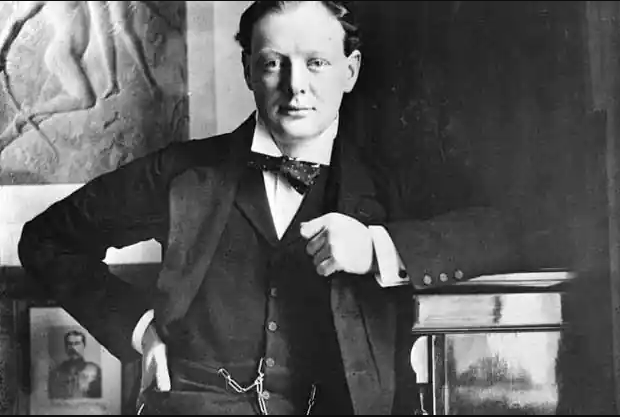
Whereas if they had taken the time and effort to look back to pre 1914 Rent Act they would’ve seen the issues of free market rents gradually consuming and therefore monopolising a sector that even Winston Churchill in 1909 fumed and rallied against to the greed and slothfulness of the rentier class.

Churchill in his mid thirties around 1909

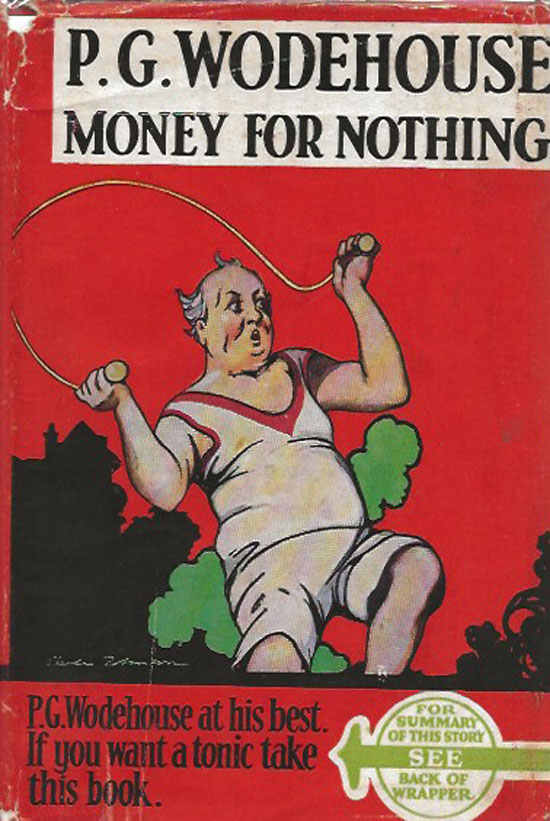
Money for Nothing

3 examples of products that arose out of a deregulated lending sector that was allowed to self regulate, with the post 1979 political ideological support of a ‘free market neoliberal doctrine’ allowing a light touch regulation regime within the sector.

Spoiler alert, it didn’t turn out well

Three examples that I personally and many millions of citizens had to navigate (1988-2009), through mazes of poor legislation, based on neoliberal ideologies of individualism and therefore individual responsibility.

“Which is a handy smokescreen for those businesses who want to shift risk from one party (the lender) to another (the borrower) whilst isolating the borrower as an independent individual versus the banking system”.


“There is only one winner in this loaded game”.


I’m glad to say this eventually unravelled, but with huge losses to the borrowers and to the once trusted reputations of various banks and building societies, here are just three of many heavily marketed products from the 1988-2008 that were sold to the unsuspecting public. The Mutual Building Society mortgage model of pre Big Bang (1988) no longer existed and the public had yet to catch up with this fact, so the driven lenders (who needed to show ever increasing profits for their shareholders) had to find other and additional ways of extracting money from future borrowers, knowing that only a few people actually understood the true value of the products namely, the inventors


In the following three pages are just 3 of the most prominent and now all banned examples of these products

Joining the dots

On the 4th of November I had a lecture on Neoliberalism, a term that I have a rough grasp as to its meaning as we all live in a neoliberal world in most of the northern hemisphere, this is the present ‘normative common sense’ of our economy and social individualistic aspirations.

A really great and thorough lecture with angles that i had not seen before and thus consequences.

Knowing how well researched and read Anna Minton is it was rather depressing to hear her admit that to a point that the concepts of the ‘reclaiming the commons’ had fizzled out. Yet as Mark ( PhD student attending the class who is working on voluntary housing schemes) commented there are projects on the go in the country, but had to admit the enthusiasm of the recent past has declined.
Bumped into a paper this morning reinforcing this depressing reality (see further below for an abstract);

https://www.academia.edu/24685147/The_Rise_and_Fall_of_Social_Capital_Requiem_for_a_Theory?email_work_card=view-paper

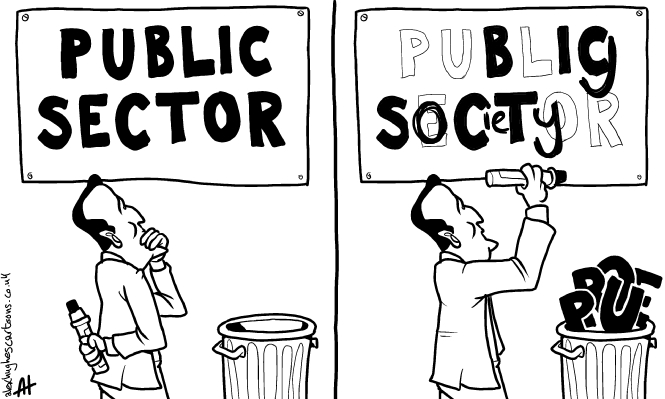
Blair’s ‘Third Way and Cameron’s ‘Big Society’ both tried (and failed) to tap into our former natural egalitarian sense of societal values (Henrich 2021) that are a disconnect from the baseline of Neoliberal thought, that as Hayek would say that at our core we are all ‘self seeking’ and therefore the only real value is monetary and thus we all should work and accept this value, and the invisible hand of the market will solve all our woes if we just give it time (recently completely dismantled by ‘trussanomiocs’).


The reason the Big Society almost instantly failed was that it’s such a contradiction to the common sense that we the public had been taught/indoctrinated for the past 40 years (1979-2010), namely; ‘there is no such thing as society’ every man woman and child for themselves, along with the suspicion we were being taken for fools, expected to work for nothing to support the bottom end of society whist the wealthy yet again ,’run off with the money’. A London East End term would be, to be ‘Mugged off’.


This is the classic ‘all actions have a reaction’ reality, you prime a population to become hyper individualistic, to follow ‘their ‘ dreams, add to the mix ‘positivity’ ie, you can do this! with a sprinkling of status aspiration and boosterism ( no negativity even with obvious failures, think Boris Johnson former PM who promoted Brexit for his own gain and could never understand the criticism as to why it failed, and it has ref -4% growth compared with those in the EU) and you have a citizen that relies on ‘feelings’ more than reality. Perfect politician and media fodder for manipulation and denial of uncomfortable facts ( ie Michael Gove; ‘we no longer need experts’).

The term from an academic perspective is ‘social capital theory’, where we take what we have to offer as individuals with others and collectively do something for the benefit of society/community and not necessarily for monetary profit, ie ‘the big society’.