Hiding in Plain Sight

Featured

The best tactic for hiding the biggest scams.

Overview

This post came about when I realised that sometimes it’s better to communicate a concept using fiction and games rather than the often dull route of academia that few ever read. The game was obvious, but the book came from a green flash of inspiration; on further research, I found I was on the right track. This further led to why and what the authors’ ideas were promoting. Below are some explanations and further thoughts on why these ideas from 1900 are more relevant than ever.

1900; the same issues as the 2020s

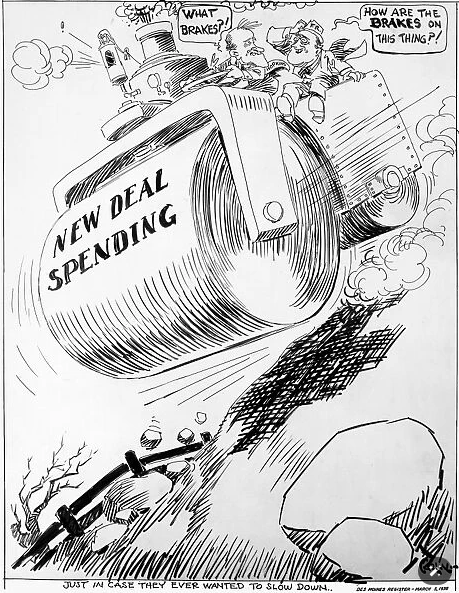
Suppose an idea or concept is large enough to become a norm, accepted by society by familiarity, and eventually a cornerstone of societal norms.

In the late 19th and early 20th centuries, two people noticed two norms that did not seem to add up: one was a playwright and journalist, and the other was an inventor, poet, engineer, and journalist.

Both saw an issue with money in its creation and use. One used a children’s book as an analogy to the money system, the other a children’s game in which the goal was to bankrupt all your opponents.

Both became classics and remain so to this day. The analogy behind both has been lost, but the truth of their criticism remains in plain sight.

If you have yet to guess, the children’s book is The Wizard of Oz, written by Lyman Frank Baum (1856 -1919), first issued in 1900 in the US.

Original book cover

The game is a board game called The Landlords Game, invented by Elizabeth J. Magie (1866 -1948) in 1903, later to be renamed (ironically) Monopoly by James Darrow, who sold the rights to Parker Brothers, who gained the monopoly of the game in 1935 (also paying E. Magie a paltry $500 for the copyright of The Landlords Game)
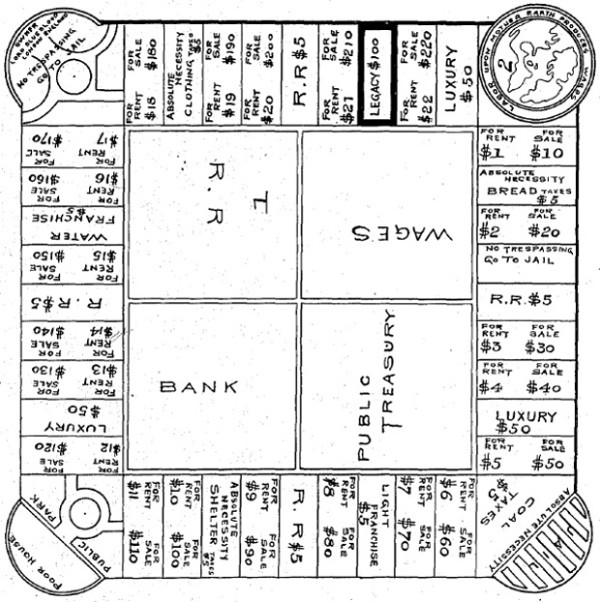
An early concept

Unveiling the Truth about Rent Control and Land Values in Housing

Featured

Further analysis of where Vicky didn’t go!

A great interview with Housing journalist and author

My comments on the interview and replies to other’s comments are in parts two and three.

I’ve been researching housing unaffordability for seven years and am about to start writing a dissertation on Rent Control (℅ Dr Anna Minton). After all these years of trying to find solutions, the elephant in the room is Rent Control. Why?

This is a disappointing and slightly dull answer, but it’s one of the keys that has unlocked many doors for working—and middle-class people who don’t want to spend 30-50% of their income on a 40-year mortgage or rent to a landlord.

Some of the main authors to thank for this conclusion are John Doling (tries to be neutral), Danny Dorling (left), Nick Bano (left), Kemp (right), and Christine Whitehead (LSE, right). It is always good to see if there is a counter-argument of value—there isn’t.
(As well as Smith, Ricardo, Marx, Keynes, Piketty, Blyth, Mazzucato, Christophers, Kelton, Richard Murry and Minton)

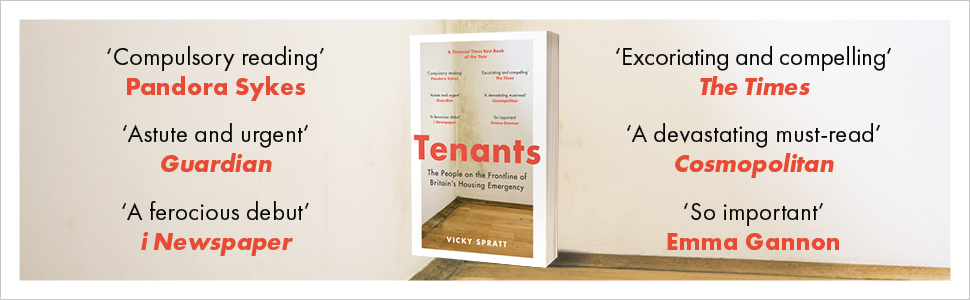
Her Book, Tenants

Why? An example: I’m a former bricklayer who ran a business in construction, so I know about house building pricing. My humble little flat;
In 1994, it was purchased for £47,700 with a floor area of 42m². In 1994, it cost £600 per m² to build, thus £25,200 to rebuild. Therefore, 53% build/47% land value = £47,700.

The killer point: in the 1950s, land values of new builds dropped to 3%. Based on those values and present-day build values (£2K per/m²), my flat would be on the market for £86,600, which equates to 2.4 times the full-time national average income (£35K). 2.4 times was also needed in the 1950s-60s for a single average income to buy an average 2.5-bed semi (.5 being the box room).

Managing Finite Resources: Unveiling the Truth about Money

Featured

Why the great ‘gotcha’ question is the wrong question

Introduction

Back in 2017, I started looking at the housing issue and, in my naivety, started with ‘just build more houses’ to solve the issue of Economics 101 that is, if there is a shortage of supply, then the price will rise, reflecting that scarcity, if we build more then creating a surplus the price will fall. Concerning money needed for such investment from the centralised government of the day, I soon encountered the age-old question when it comes to spending money;

I’d reached a dead end before I’d even started! If I/we couldn’t pay for ‘it,’ whatever solutions I found would always be scuppered by this universal ‘gotcha’.

So then followed a dive into the economics of money, not what to do with it once we have it (which is a political and ideological choice) but where it comes from;

  • Is it tax revenues?
  • Is it government borrowing from banks via government-issued savings bonds?
  • Is it gold reserves?
  • Who are we actually in debt to?
  • And if we paid it all back, would we have any money?

In this blog entry, I will explain why finding ‘the money’ has never been the issue. The real issue is our natural finite resources, both from planet Earth and from us humans who inhabit it.

So, to save time, I’ve divided this into short chapters relating to page numbers. I recommend reading the whole article, rereading areas that are initially hard to comprehend, following links, and asking questions in the comment section. This article will evolve with feedback. It has taken me 7 years to understand this, so don’t worry if, at first, it all seems too hard to understand—it’s a paradigm shift.

This is a very brief overview. See recommendations in the Conclusion for further reading and viewing.

Chapter One, Page 2: What is money?

Chapter Two, Page 3: What about ‘The National Debt’?

Chapter Three, Page 4: So what’s stopping the government from creating more money

Chapter Four, Page 5: If the government can create money, why does it borrow it?

Conclusion, Page 6.

Exposed;The Big Con

Who really pays for pseudo-public space?

Over the past 40 years, there has been a slow creep of what is known as pseudo-public space. This space is not controlled or maintained by public elected bodies, even though when you walk, drive or cycle through the space, it may at first seem public; after all, you have entered without going through a gate, and there was no signage and anyway, everyone else seems oblivious to its status, so it must be like other public space, like the street outside your front door or the local high street. Turns out it’s not.

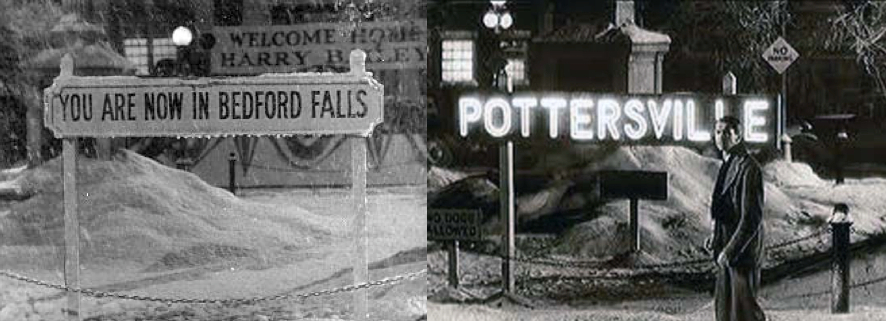
We are no longer living in post-war ownership freehold based Bedford Falls but leasehold to the rentier dystopian Pottersville.

The first example is Canary Wharf, which started this trend. The government of the day had a problem. they wanted to redevelop a declining and abandoned part of a city without spending too much public money. So, a deal was struck between private companies and the central government.

The deal was based on the US idea of the Urban Development Corporation (UDC), which became the London Docklands Development Corporation (LDDC), so the project had no local government or the then Greater London Council (GLC) involvement; they were completely sidestepped. The basis of the idea was that the land would be sold and held in perpetuity as private land, but with public access, all well and good, but the devil, as always, is in the detail; this access was granted as long as the new owners had the right to create their own rules concerning who, when and where access was granted. Again, on the face of it, this seems fair.

Still, it turned out to be pernicious, as decisions were made by the private owners as to the ‘type of person’ who would be welcome, and here is the second and even more powerful rule of self-interest, as the new owners (freehold owners) needed to justify the high rents, which are a combination of ;

1)Ground rent: The property owner (the flat/business premises) does not own the land it was built upon; thus, they are a leaseholder, not a freeholder, and must pay ground rent to the freeholder owner.

2)The service charge covers building maintenance, the concierge, and all other external services, such as the upkeep of the parks and gardens, rubbish clearance, CCTV, and security guards.

Why security guards? This service is needed to justify the high rents/service charges by providing a ‘safe environment’, a conjuncture for getting the right people with money to spend and keeping out those who can not. They are often dressed like the police to make their presence known, which is fine if you fit the correct demographic; if not, you will be hassled by seemingly innocent questions and reminded that you are in a private space, further blurring the lines between private pseudo-public space and actual democratic public space.

Canary Wharf 2020s

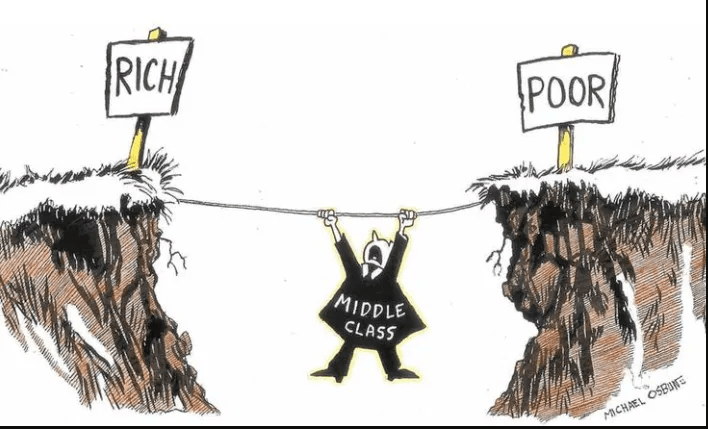
The Silent Middle Class

Why the silence in 2023?

Introduction

This post starts with summer background research on the middle class, which helps evaluate the primary content with this newfound knowledge. Then, an obscure, seemingly unrelated programme from Radio 4 that, when deconstructed, goes to the heart of the present denialism by the middle class concerning housing.
The post finishes with broad conclusions leading to further research for workable solutions or just waiting for another bloody war/revolution circa 1914-1945.

Summer reading and prelim for context

Summer reading consisted of subjects as diverse as the History of the Welfare State from 1800 to the Present, Comparative Housing Policy Across Europe and North America, and various criticisms of the supposed ‘Science’ of Economics by various heavyweights in the same field and some books on Agency and Meritocracy, just to add to the mix!

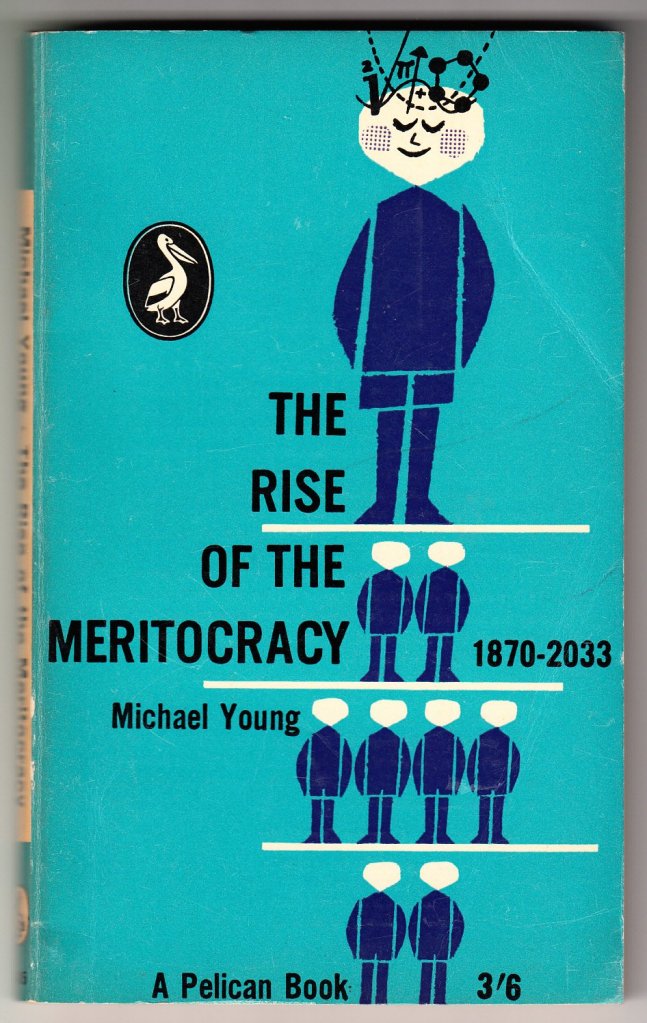
The original dystopian novel that shows the end game of meritocracy, written by the brilliant sociologist Michael Young in 1958, alas this book is sadly out of print.

What has been interesting is the various author’s interpretations of the same historical facts from different political ideologies and philosophical approaches, along with some quoting academics and the great philosophers who were locked within their lived experiences whilst other writers took a broader look from afar with present hindsight and intellectual norms to judge past reactions to circumstance and the cumulative effects of past decisions. Both are valid, though the former can seem more ideological and the latter more self-critical.

I also attended a series of lectures on the British Class System at Cambridge University, with more international post-doctoral students than you could throw a stick at; all shared their thoughts with grace and humility. Their input resulted in some fascinating insights and perceptions of the class system that I wasn’t aware of.
The weekend of lectures and discussion concluded that class is way more fluid and depends a lot on the definitions and parameters used within the time/place as a framework to make judgments. The perception of the British to class is much more nuanced than the US structure of the wealth-based class system, as proven by the comments from the US contingent in the lectures.

View from Madingly Hall, Cambridge.

Class; The much maligned White Van Man and why we ignore him at our peril

A book review and explanation of why this ignored class is so powerful as a kingmaker in UK politics.

The typical elitist view of the old petty bourgeoisie

Some interesting insights from two new books (2023), one from the UK and the other from the US.
Two writers from different sides of the pond with different histories to contend and yet come to some interesting conclusions as to why many White working-class people vote for populist right-wing parties whose interests lie with the top 1% and not the bottom 50%.

This also goes some way in answering why this recognised King Maker group of voters (if they choose even to vote) are so sought after by both major parties in the UK and the US. Not so large to be a majority, but as swing voters, large enough to determine the outcome of present-day elections.

So who are they, where did they come from, and why do they vote against their self-interest?

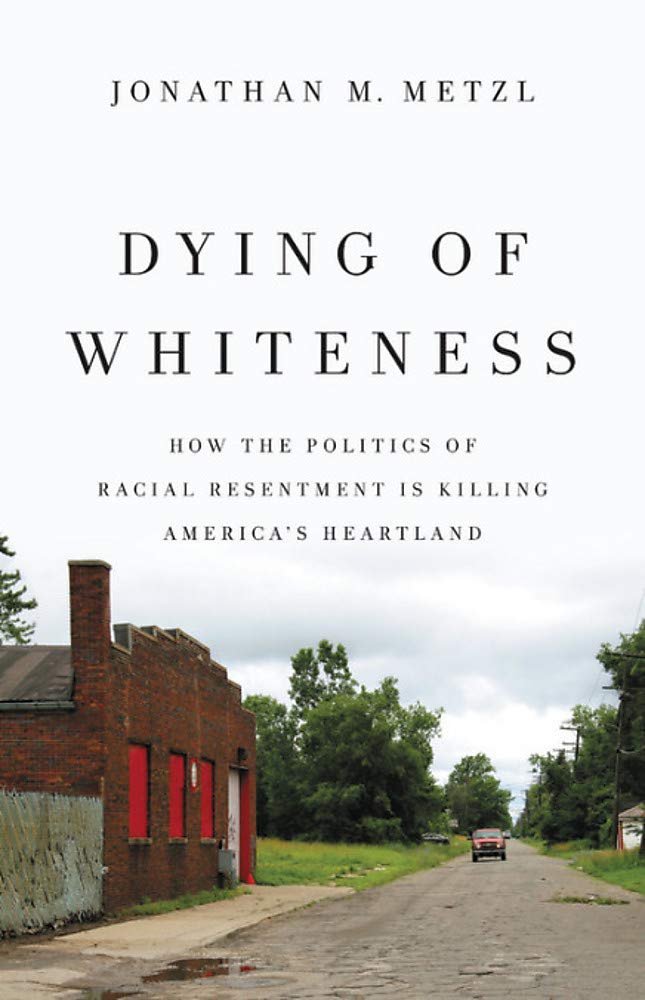
The UK book by Dan Evans, A Nation of Shop Keepers – The Unstoppable Rise of the Petty Bourgeoisie and The US book by Jonathan M. Melzl, Dying on Whiteness – How the Politics of Racial Resentment is Killing America’s Heartland.

Piketty; Stirring up the Hornets Nest

Looking at the conjuncture of his research and why it caused such a reaction

Even French economists have an air of the “Nouvelle Vague”

This piece is in response to questions concerning Thomas Pikettys book ‘Capital of the 21st Century’. I’ve read and studied this and his equally thorough book ‘Capital and Ideology’. I don’t pretend to be the last word on Piketty’s writings, and the man can more than defend himself, but what follows are some crucial points to his overall argument. 

Note; when I say conjuncture, it’s in the context of Stuart Hall’s “conjunctural analysis.” Briefly, the subtext of an issue, so for example, ‘benefit scroungers’ as political discourse, as a conjuncture, means we need an excuse for reducing payments for the unemployed so we (the government of the day ) can reduce deficits and grant tax reductions for the demographic of future voters of whom this would appeal. (Hall 2021) (Jefferson 2021)

Anonymous comments concerning Piketty’s Books from the political and economic academic Marianna Mazzucato’s video on her book; The Value of Everything

1- He does not consider the most critical facts, and it lacks historical evidence and contradicts reality.  Its claims appeal to ignorant people with little idea of economic history and financial concepts.  I am not surprised that the presenter relies on such a reference because most of what she says she can’t justify with evidence

2- He claims wealth is passed down from ancestors. He ignores the historical fact that most wealthy people have not gotten wealthy through inheritance. He claims growing inequality is a function of capitalism but ignores all other systems.

 3- Picketty examined the circumstances of wealth in the 19th and 20th centuries and concluded that the 1% owned more wealth than previously. He confuses statistics with individuals, like many people who don’t understand statistics.

Video in question.

Ref; The Housing Crisis is Even Worse Than You Think | Aaron Bastani meets Vicky Spratt | Downstream

At present I’m working on a paper that will be finished by the 26th of April, once completed I will write a timeline for the Video filling in the areas that some may want more information on. As well as the Buy-To-Let Quetion that was left unanswered.

Post 26th I’ll have more info as the area I’m working on is the periods of; 1930-42, 1945-70, followed by 1979 to the present concerning universalist approach to housing/welfare until 1979 then the selectivist approach to housing/welfare.

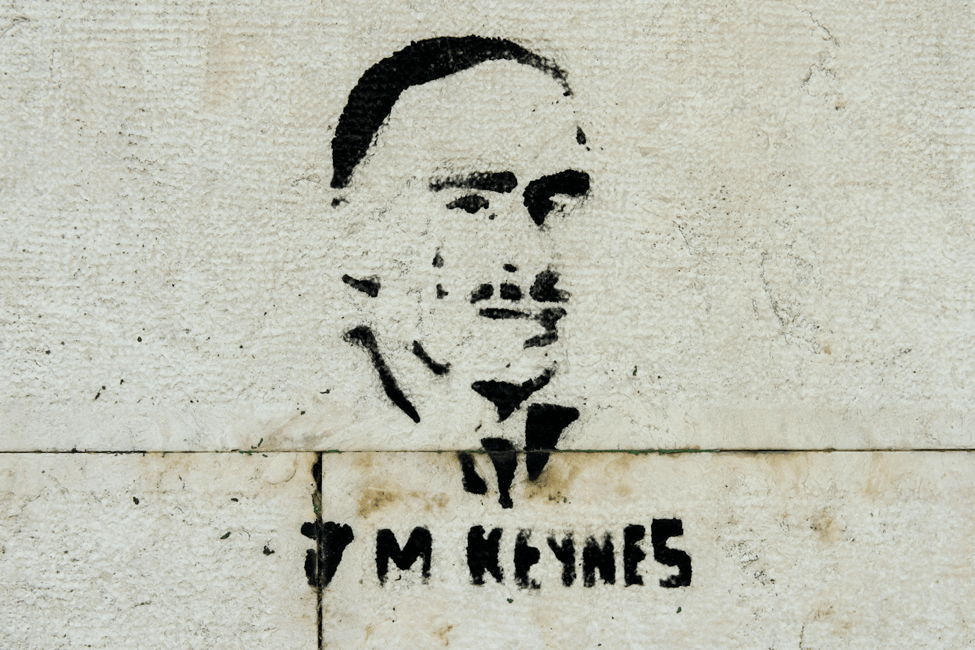
Keynes; The role of Government is to create a society where all can have the opportunity to have a ‘good life’ and not just the few.

What actually is the point of the Private Rental Sector (PRS)?

The Housing Act of 1988 deregulated new lettings to encourage the PRS to return, 44 years later the potential for 1910 rent strikes of pre The Rent Control Act of 1914 look like they may return.

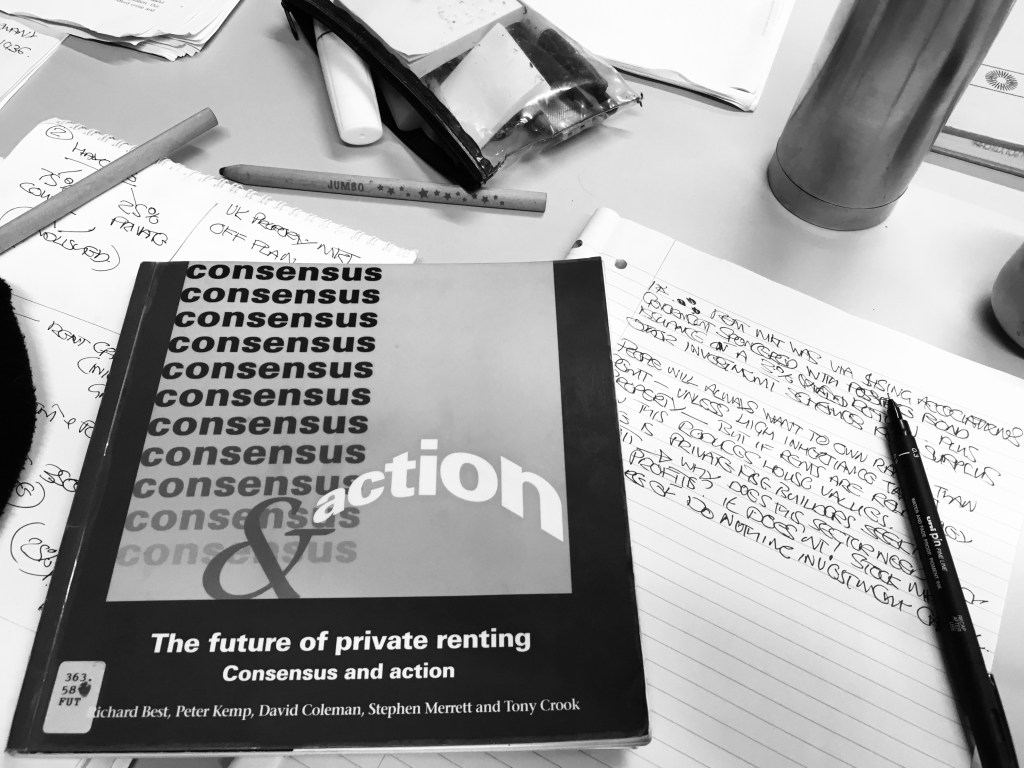
Sitting in the library, grinding my way through various papers and journals on Rent Control (RC), I started to read a report from the much admired Joseph Rowntree Foundation (JRF) published in 1992 with various academic, housing pressure groups, practitioners and financiers together with advisors to politicians from different parties all contributing to the discussion. So far so good, but…..

The book in question amongst my usual chaos

Two issues of cognitive bias became increasingly apparent, both of which we all suffer from as emotional beings, so I’m not specifically criticising the authors of the report, but taking the more cautious route of an anthropologists like, the sadly departed David Graeber and also the political economist Thomas Piketty. Graeber in his book (and the secret is in the title) Debt; The First 5000 years and Piketty to a lesser extent focussed on the past 200 years in his highly acclaimed and fascinating book Capital of the 21st Century.

Recency bias is a cognitive bias that favors recent events over historic ones

The first bias was the effect of just looking to the lived and experienced recent past (recency bias) and making a judgment that a correlation of rent controls of the recent past have meant that the PRS has reduced due to not enough yield being available from old RC properties, that is a fair judgment, but does that mean that to get more rented properties available for the small sector (at the time of the report) of transient renters, namely young people on their way to purchase and temporary work force ( in fact a red herring) moving around the country, you just simply reverse the model?

So with that logic, if rent control causes PRS shortages then abandon rent control and supplement the PRS and a ‘fair’ rental market will return with the benefit of landlords now also getting a ‘fair return’.

What could possibly go wrong’?

The issue with this decision is that now in 2022 we are seeing the true consequences of this reversal, rather than market rates settling to a ‘fair rent’ level they are driving people into cohabitation and single room conversions with shared bathrooms as incomes have stagnated (not so much trickle down, but rather, trickle up), but rents increase as scarcity within the ‘free market’ predicts.

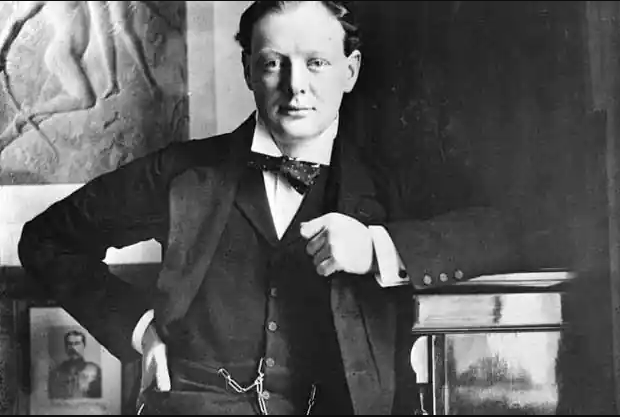
Whereas if they had taken the time and effort to look back to pre 1914 Rent Act they would’ve seen the issues of free market rents gradually consuming and therefore monopolising a sector that even Winston Churchill in 1909 fumed and rallied against to the greed and slothfulness of the rentier class.

Churchill in his mid thirties around 1909

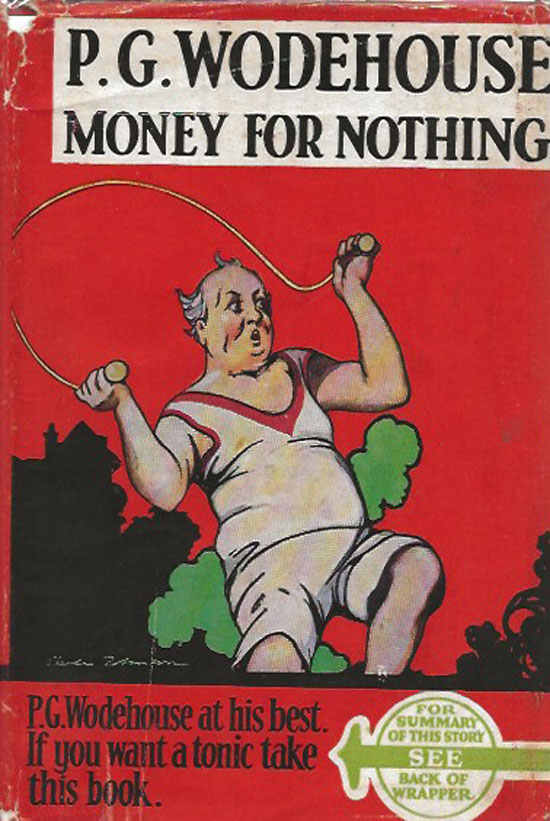
Money for Nothing

3 examples of products that arose out of a deregulated lending sector that was allowed to self regulate, with the post 1979 political ideological support of a ‘free market neoliberal doctrine’ allowing a light touch regulation regime within the sector.

Spoiler alert, it didn’t turn out well

Three examples that I personally and many millions of citizens had to navigate (1988-2009), through mazes of poor legislation, based on neoliberal ideologies of individualism and therefore individual responsibility.

“Which is a handy smokescreen for those businesses who want to shift risk from one party (the lender) to another (the borrower) whilst isolating the borrower as an independent individual versus the banking system”.


“There is only one winner in this loaded game”.


I’m glad to say this eventually unravelled, but with huge losses to the borrowers and to the once trusted reputations of various banks and building societies, here are just three of many heavily marketed products from the 1988-2008 that were sold to the unsuspecting public. The Mutual Building Society mortgage model of pre Big Bang (1988) no longer existed and the public had yet to catch up with this fact, so the driven lenders (who needed to show ever increasing profits for their shareholders) had to find other and additional ways of extracting money from future borrowers, knowing that only a few people actually understood the true value of the products namely, the inventors


In the following three pages are just 3 of the most prominent and now all banned examples of these products