This post came about when I realised that sometimes it’s better to communicate a concept using fiction and games rather than the often dull route of academia that few ever read. The game was obvious, but the book came from a green flash of inspiration; on further research, I found I was on the right track. This further led to why and what the authors’ ideas were promoting. Below are some explanations and further thoughts on why these ideas from 1900 are more relevant than ever.
1900; the same issues as the 2020s
Suppose an idea or concept is large enough to become a norm, accepted by society by familiarity, and eventually a cornerstone of societal norms.
In the late 19th and early 20th centuries, two people noticed two norms that did not seem to add up: one was a playwright and journalist, and the other was an inventor, poet, engineer, and journalist.
Both saw an issue with money in its creation and use. One used a children’s book as an analogy to the money system, the other a children’s game in which the goal was to bankrupt all your opponents.
Both became classics and remain so to this day. The analogy behind both has been lost, but the truth of their criticism remains in plain sight.
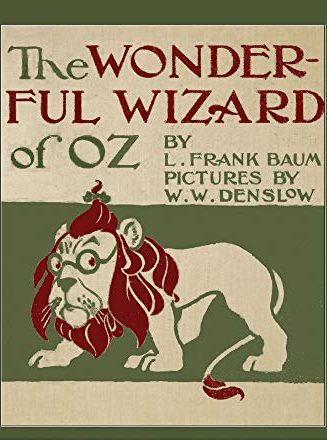
If you have yet to guess, the children’s book is The Wizard of Oz, written by Lyman Frank Baum (1856 -1919), first issued in 1900 in the US.
Original book cover
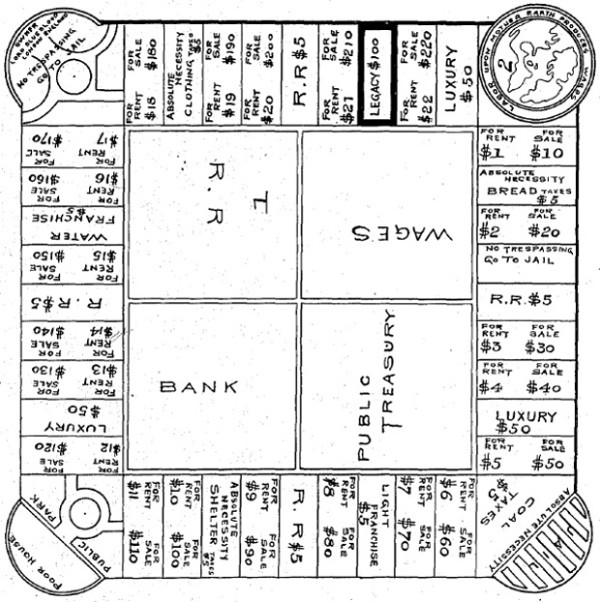
The game is a board game called TheLandlords Game, invented by Elizabeth J. Magie (1866 -1948) in 1903, later to be renamed (ironically) Monopoly by James Darrow, who sold the rights to Parker Brothers, who gained the monopoly of the game in 1935 (also paying E. Magie a paltry $500 for the copyright of The Landlords Game)
This post starts with summer background research on the middle class, which helps evaluate the primary content with this newfound knowledge. Then, an obscure, seemingly unrelated programme from Radio 4 that, when deconstructed, goes to the heart of the present denialism by the middle class concerning housing. The post finishes with broad conclusions leading to further research for workable solutions or just waiting for another bloody war/revolution circa 1914-1945.
Summer reading and prelim for context
Summer reading consisted of subjects as diverse as the History of the Welfare State from 1800 to the Present, Comparative Housing Policy Across Europe and North America, and various criticisms of the supposed ‘Science’ of Economics by various heavyweights in the same field and some books on Agency and Meritocracy, just to add to the mix!
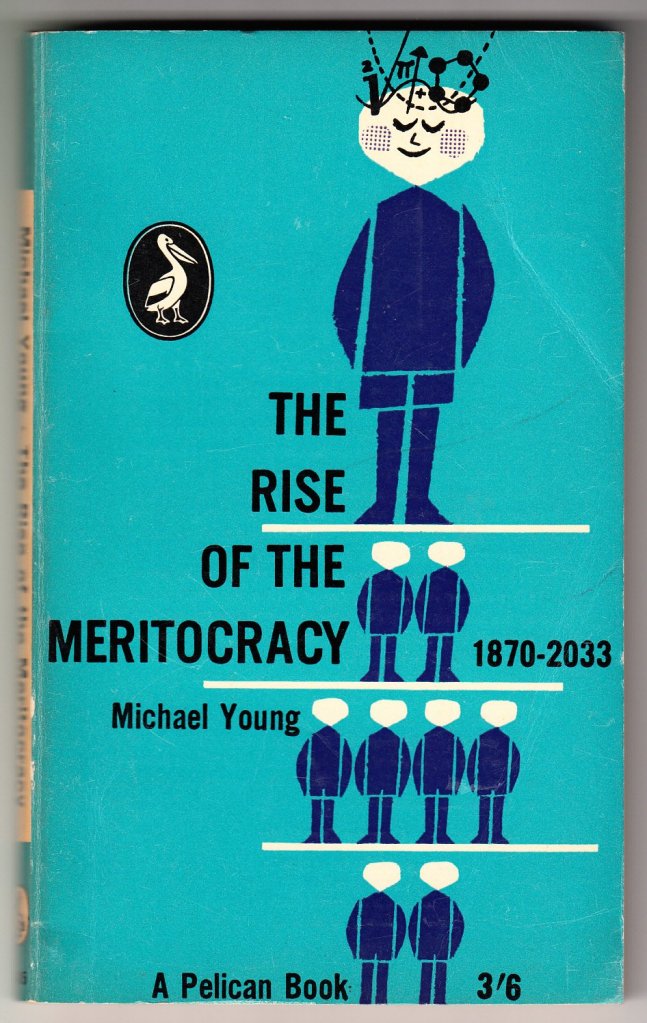
The original dystopian novel that shows the end game of meritocracy, written by the brilliant sociologist Michael Young in 1958, alas this book is sadly out of print.
What has been interesting is the various author’s interpretations of the same historical facts from different political ideologies and philosophical approaches, along with some quoting academics and the great philosophers who were locked within their lived experiences whilst other writers took a broader look from afar with present hindsight and intellectual norms to judge past reactions to circumstance and the cumulative effects of past decisions. Both are valid, though the former can seem more ideological and the latter more self-critical.
I also attended a series of lectures on the British Class System at Cambridge University, with more international post-doctoral students than you could throw a stick at; all shared their thoughts with grace and humility. Their input resulted in some fascinating insights and perceptions of the class system that I wasn’t aware of. The weekend of lectures and discussion concluded that class is way more fluid and depends a lot on the definitions and parameters used within the time/place as a framework to make judgments. The perception of the British to class is much more nuanced than the US structure of the wealth-based class system, as proven by the comments from the US contingent in the lectures.
A book review and explanation of why this ignored class is so powerful as a kingmaker in UK politics.
The typical elitist view of the old petty bourgeoisie
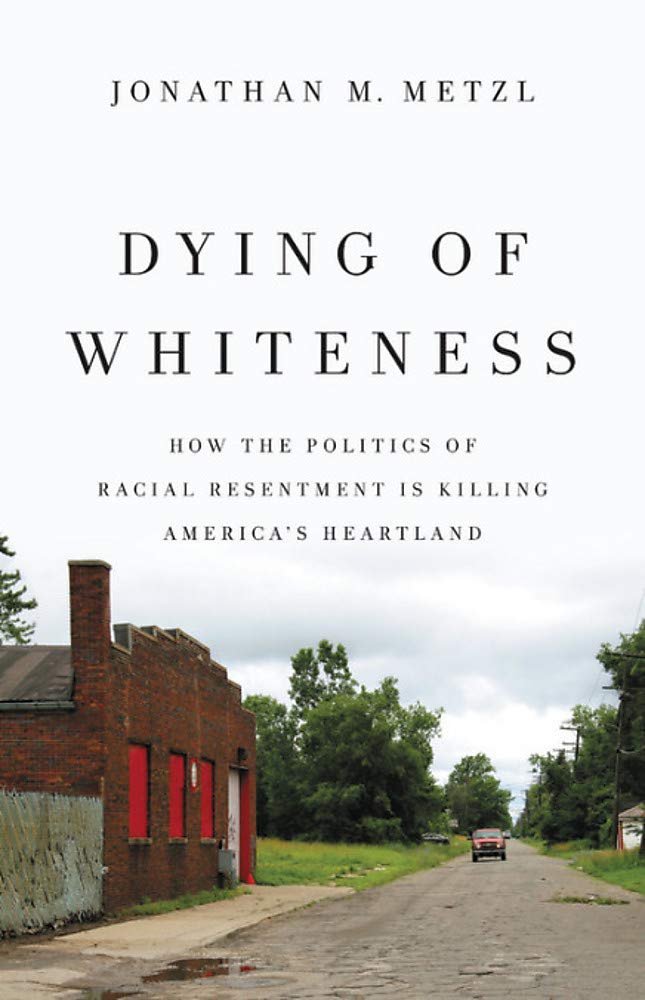
Some interesting insights from two new books (2023), one from the UK and the other from the US. Two writers from different sides of the pond with different histories to contend and yet come to some interesting conclusions as to why many White working-class people vote for populist right-wing parties whose interests lie with the top 1% and not the bottom 50%.
This also goes some way in answering why this recognised King Maker group of voters (if they choose even to vote) are so sought after by both major parties in the UK and the US. Not so large to be a majority, but as swing voters, large enough to determine the outcome of present-day elections.
So who are they, where did they come from, and why do they vote against their self-interest?
The UK book by Dan Evans, A Nation of Shop Keepers – The Unstoppable Rise of the Petty Bourgeoisie and The US book by Jonathan M. Melzl, Dying on Whiteness – How the Politics of Racial Resentment is Killing America’s Heartland.
At present I’m working on a paper that will be finished by the 26th of April, once completed I will write a timeline for the Video filling in the areas that some may want more information on. As well as the Buy-To-Let Quetion that was left unanswered.
Post 26th I’ll have more info as the area I’m working on is the periods of; 1930-42, 1945-70, followed by 1979 to the present concerning universalist approach to housing/welfare until 1979 then the selectivist approach to housing/welfare.
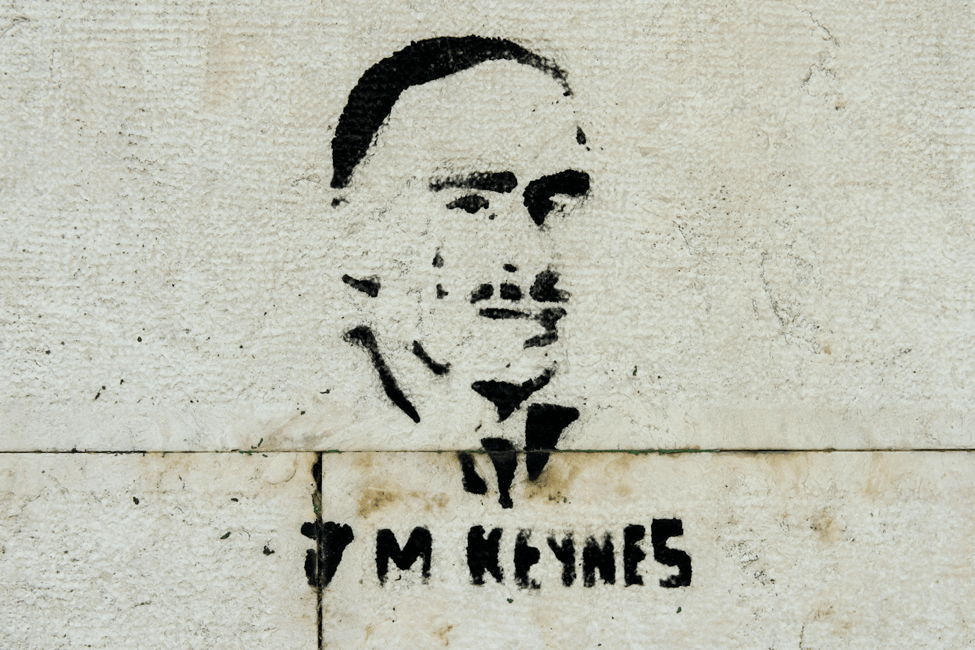
Keynes; The role of Government is to create a society where all can have the opportunity to have a ‘good life’ and not just the few.
A surreal journey through a multiverse of decisions made by one character, reflecting on the concept of co-existing multiverses in different places and times.
The Movie
The movie “Everything, Everything All at Once” is definitely surreal in its format, jumping all over the place to communicate the idea of the multiverse of decisions made throughout one’s life. This movie focuses on one character’s journey; each individual since the beginning of time itself has a unique multiverse of decisions and consequences, according to quantum theory of co-existing multiverses in different places and times, but are only fixed when observed (ie the thought experiment of Erwin Schrödinger’s cat) .
Thus in the end it was entirely about the universe she wanted to reside in, which was not repeating the mistakes (as she saw them) of her parents, that due to her own hurt and stubbornness she was in fact repeating,
Thus the nub of the movie, the chance to see and experience the results of infinite ‘what if’s’.
The mundane start, with everyday pressures of balancing time, money and family of just one person in the billions alive in the present, (let alone the past and future), further enlarges (to our limited imagination) the infinite size of the multiverse she was about to cross.
What if – We Were Rocks?
All the actors in her world remained, as it was her world, thus ours would have different influencers and actors to play out our story. She was in fact and would always be the hero of her own journey (ie messianic). The idea of enlightenment was explored by the husband she always wanted, but later realised why she married the man she did, namely to balance her initial fast thinking primary reaction (ref; Kahneman ‘Thinking fast and slow’) to fight like a dragon mother that Chinese women in their 40’s are often stereotyped as being. But this has nothing to do with the other characters, it’s purely her story with everything circulating around her, within her universe, everyone else is an actor responding to her decisions, reminds me of the hard to follow, but brilliant movie “Synecdoche, New York,” directed by Charlie Kaufman, an incredibly surreal journey into the life, times and draining disappointments of a playwright, who has the opportunity to write, direct, produce and star in his own play entirely about himself, gradually realising the futility of it all and life’s simple but often consequently devastating decisions, acted out before him.
But we don’t. A reference to previous work from a MA in Landscape Architecture 2012, relevant to a morning lecture on Psychogeography (describes the effect of a geographical location on the emotions and behaviour of individuals).
The Background
The Forest
This was an option module from the MA called ‘Art and Context’. The the outcome for the module was to teach, challenge and explore our preconceived ideas as to ‘What is Landscape?’ Via a field trip in the deep South West of England of 5 days in a mixed forest (deciduous native and evergreen softwood grown and sold as a product of the forest) owned by the renamed Forestry England (formerly the Forestry Commision). The site was partially funded by on site log cabins for holiday retreats within the forest, perfect for a group of aspiring Landscape Architects wanting to get out of the classroom and experience the human Biophilic response to nature.
The idea was to make an intervention in the forest. It could be anything from a physical structure to music, poetry, art or a later piece to be shown as part of the final symposium. We were all asked to present, with the question; ‘what is landscape?’ Again open to whatever style or form, but the proviso was to really look in depth to the experience, the intervention and what you learnt that could be shared, but also challenging some of the norms we associate with the Landscape as humans onlookers and/or being part of the said landscape.
“I love this stuff, once the ideas start to flow, but hate it when that blank sheet of paper just laughs and mocks you for your lack of imagination”.
The artists running the course were from the more abstract land interventionist style, and I mean ‘Abstract’ with the capital ‘A’. We were all challenged very quickly as to our assumptions and thus the struggles ensued to even start to form any ideas.
But they were also very encouraging once some ideas of value started to germinate.
The Housing Act of 1988 deregulated new lettings to encourage the PRS to return, 44 years later the potential for 1910 rent strikes of pre The Rent Control Act of 1914 look like they may return.
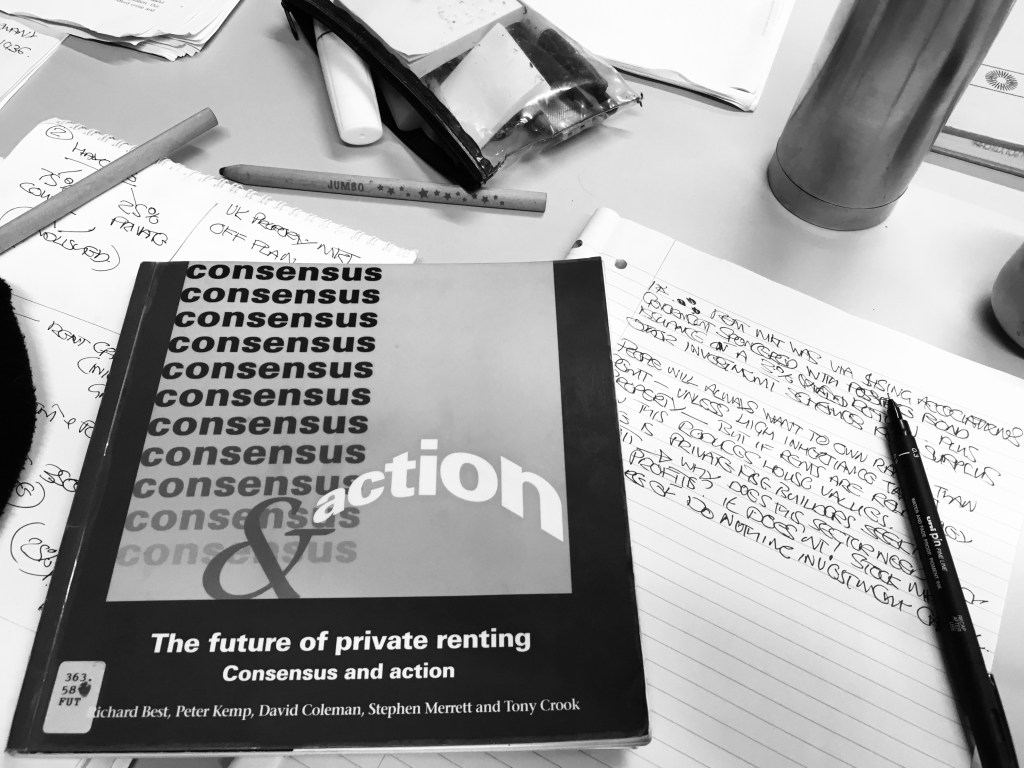
Sitting in the library, grinding my way through various papers and journals on Rent Control (RC), I started to read a report from the much admired Joseph Rowntree Foundation (JRF) published in 1992 with various academic, housing pressure groups, practitioners and financiers together with advisors to politicians from different parties all contributing to the discussion. So far so good, but…..
The book in question amongst my usual chaos
Two issues of cognitive bias became increasingly apparent, both of which we all suffer from as emotional beings, so I’m not specifically criticising the authors of the report, but taking the more cautious route of an anthropologists like, the sadly departed David Graeber and also the political economist Thomas Piketty. Graeber in his book (and the secret is in the title) Debt; The First 5000 years and Piketty to a lesser extent focussed on the past 200 years in his highly acclaimed and fascinating book Capital of the 21st Century.
“Recency bias is a cognitive bias that favors recent events over historic ones“
The first bias was the effect of just looking to the lived and experienced recent past (recency bias) and making a judgment that a correlation of rent controls of the recent past have meant that the PRS has reduced due to not enough yield being available from old RC properties, that is a fair judgment, but does that mean that to get more rented properties available for the small sector (at the time of the report) of transient renters, namely young people on their way to purchase and temporary work force ( in fact a red herring) moving around the country, you just simply reverse the model?
So with that logic, if rent control causes PRS shortages then abandon rent control and supplement the PRS and a ‘fair’ rental market will return with the benefit of landlords now also getting a ‘fair return’.
“What could possibly go wrong’?
The issue with this decision is that now in 2022 we are seeing the true consequences of this reversal, rather than market rates settling to a ‘fair rent’ level they are driving people into cohabitation and single room conversions with shared bathrooms as incomes have stagnated (not so much trickle down, but rather, trickle up), but rents increase as scarcity within the ‘free market’ predicts.
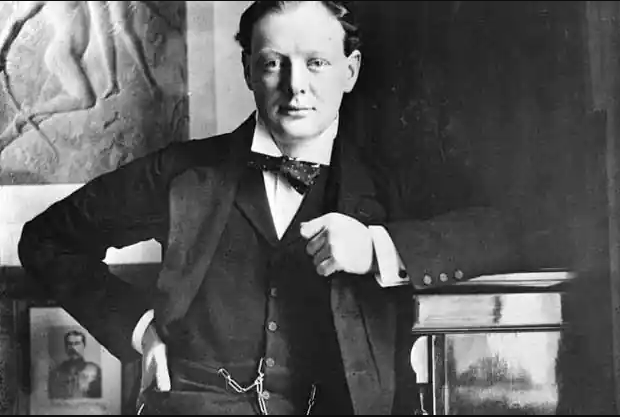
Whereas if they had taken the time and effort to look back to pre 1914 Rent Act they would’ve seen the issues of free market rents gradually consuming and therefore monopolising a sector that even Winston Churchill in 1909 fumed and rallied against to the greed and slothfulness of the rentier class.
An outline of a strategy to address the commodified housing market. The idea originated from a thought experiment in 2018.
One of the first paradoxical issues surrounding Rent Control (RC) is the difficulty of implementing it, particularly because it would negatively impact the wealthy establishment the most. This often leads to a refusal to even consider the proposal.
This post is a response to a question I didn’t have time to address at the end of a presentation. I discussed the fundamental aspects of the current housing model and explained why unregulated private purchases and rents have become entirely market-driven due to the finalization of the mortgage debt market and the commodification of the living spaces we call home.
The question is an obvious first hurdle to even thinking about an introduction of private RC,
Slightly paraphrased question from my classmate Mark;
“How are you going to get an acceptance from small private landlords let alone institutions”?
My response stems from ideas I’ve been developing for a few years, inspired by a theoretical Beveridge 2.0 report. This includes addressing the “five giants” of a 21st-century neoliberal society in the UK. It’s very broad, but the main point is how you convince people that the stick of RC will benefit the nervous middle (50-90 percentile) and suspicious asset wealth (top 10%).
Addressing bias
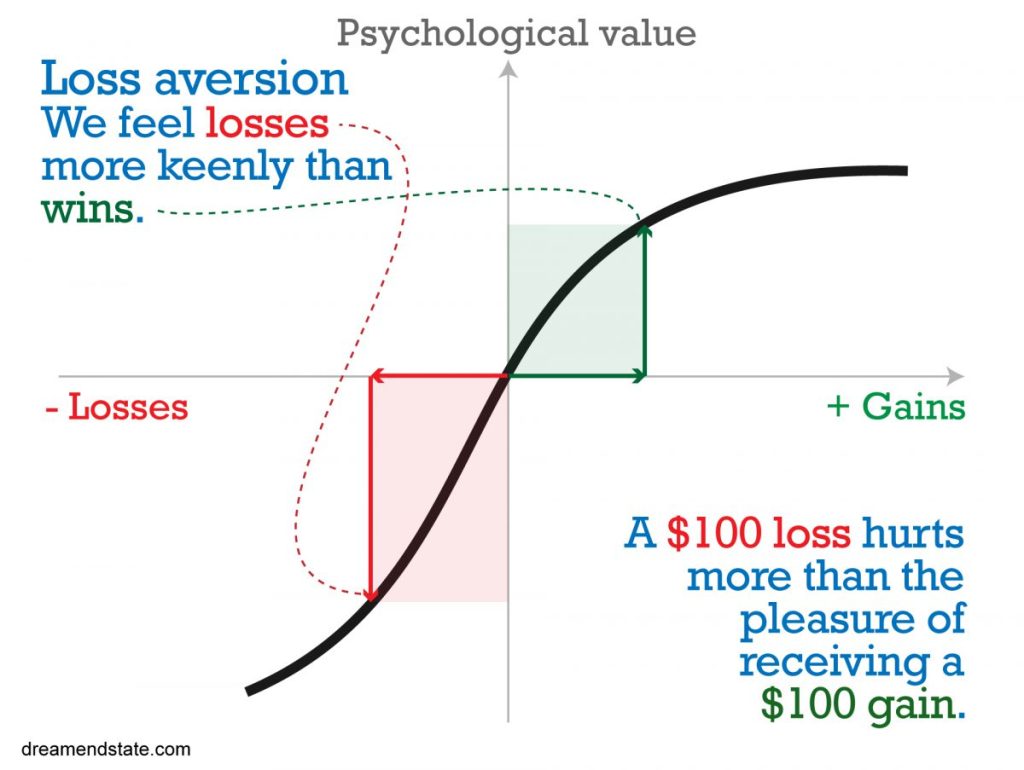
According to behavioural economist Daniel Kahneman, we tend to exhibit a stronger bias toward loss—known as “loss aversion”—than toward gain. This bias significantly influences our decision-making. Initially, it may seem beneficial to be overly cautious, as common sense suggests that careful consideration of financial decisions is wise. However, this tendency can lead to poor judgment in certain situations, as illustrated by gamblers who obsessively chase after their initial losses while ignoring the more rational option of accepting a loss and walking away (Kahneman, 2011). In contrast, an AI algorithm would evaluate the odds and would likely accept the initial loss if it determined that doing so was the best course of action for maximizing long-term gains. Humans, on the other hand, often struggle with this due to the emotional weight of the initial loss, often reacting with the fast thinking, emotion-led reactionary part of our decision-making dual apparatus ( the other being the slow rational side).
So, with this in mind, to counter the loss, we need a greater gain. Thus, in this report, I figured four carrots to the one stick. This is so important to creating societal jewels (i.e., the NHS) that can be justified to the majority over the small minority of self-seeking short-termists ( and we will see in the paper that all benefit long-term, again, the NHS).
Though it should be stated that any welfare fiscal spending cannot show a direct profit by its very nature, it’s once, twice, thrice removed. The measurement of GDP growth is only seen as a fiscal measurement of ‘production’ ( highlighted as the definition of production has been constantly manipulated; for example, only recently has rentier landlordism been included as a product, even though its extraction, nothing is actually created). The separation of generations cared for, educated from birth to grave, kept healthy, has food, shelter, warmth and no fear of retirement to concentrate on producing measurable wealth during the hours of productive employment.
“Not all can be commodified for direct profit, but what can be produced unhindered by welfare concerns will be measurably more efficient in final output. A sick hungry workforce is absent in mind and body.
On the 4th of November I had a lecture on Neoliberalism, a term that I have a rough grasp as to its meaning as we all live in a neoliberal world in most of the northern hemisphere, this is the present ‘normative common sense’ of our economy and social individualistic aspirations.
A really great and thorough lecture with angles that i had not seen before and thus consequences.
Knowing how well researched and read Anna Minton is it was rather depressing to hear her admit that to a point that the concepts of the ‘reclaiming the commons’ had fizzled out. Yet as Mark ( PhD student attending the class who is working on voluntary housing schemes) commented there are projects on the go in the country, but had to admit the enthusiasm of the recent past has declined. Bumped into a paper this morning reinforcing this depressing reality (see further below for an abstract);
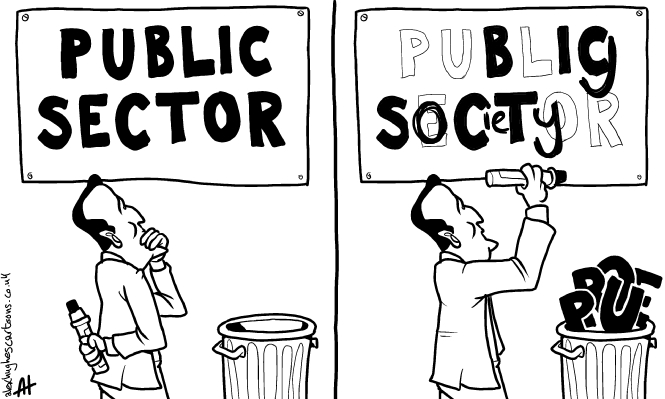
Blair’s ‘Third Way and Cameron’s ‘Big Society’ both tried (and failed) to tap into our former natural egalitarian sense of societal values (Henrich 2021) that are a disconnect from the baseline of Neoliberal thought, that as Hayek would say that at our core we are all ‘self seeking’ and therefore the only real value is monetary and thus we all should work and accept this value, and the invisible hand of the market will solve all our woes if we just give it time (recently completely dismantled by ‘trussanomiocs’).
The reason the Big Society almost instantly failed was that it’s such a contradiction to the common sense that we the public had been taught/indoctrinated for the past 40 years (1979-2010), namely; ‘there is no such thing as society’ every man woman and child for themselves, along with the suspicion we were being taken for fools, expected to work for nothing to support the bottom end of society whist the wealthy yet again ,’run off with the money’. A London East End term would be, to be ‘Mugged off’.
This is the classic ‘all actions have a reaction’ reality, you prime a population to become hyper individualistic, to follow ‘their ‘ dreams, add to the mix ‘positivity’ ie, you can do this! with a sprinkling of status aspiration and boosterism ( no negativity even with obvious failures, think Boris Johnson former PM who promoted Brexit for his own gain and could never understand the criticism as to why it failed, and it has ref -4% growth compared with those in the EU) and you have a citizen that relies on ‘feelings’ more than reality. Perfect politician and media fodder for manipulation and denial of uncomfortable facts ( ie Michael Gove; ‘we no longer need experts’).
The term from an academic perspective is ‘social capital theory’, where we take what we have to offer as individuals with others and collectively do something for the benefit of society/community and not necessarily for monetary profit, ie ‘the big society’.
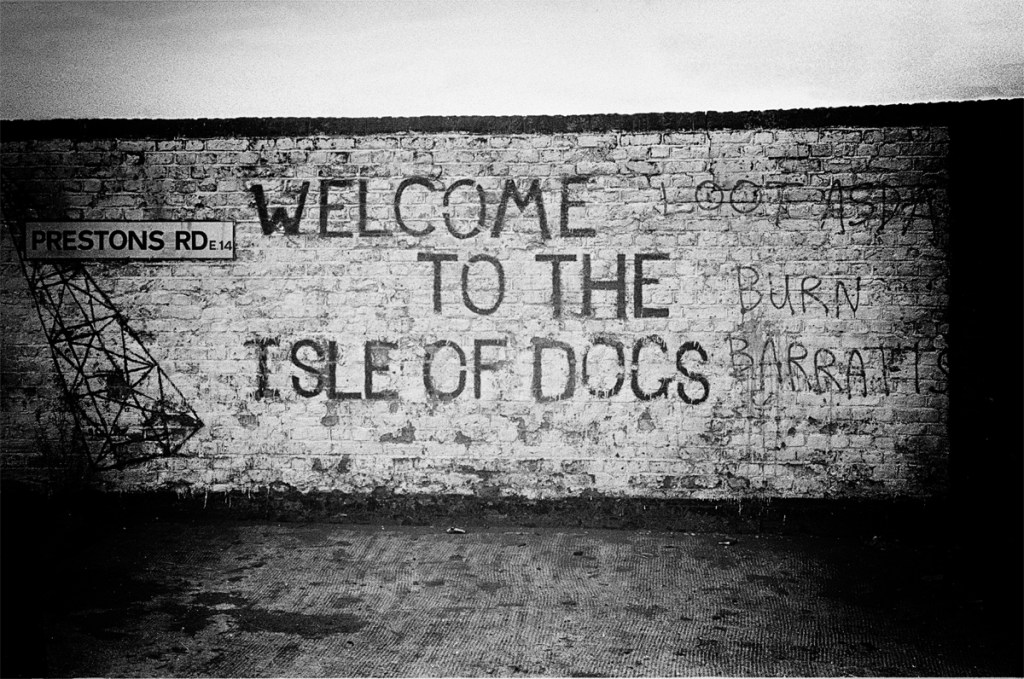
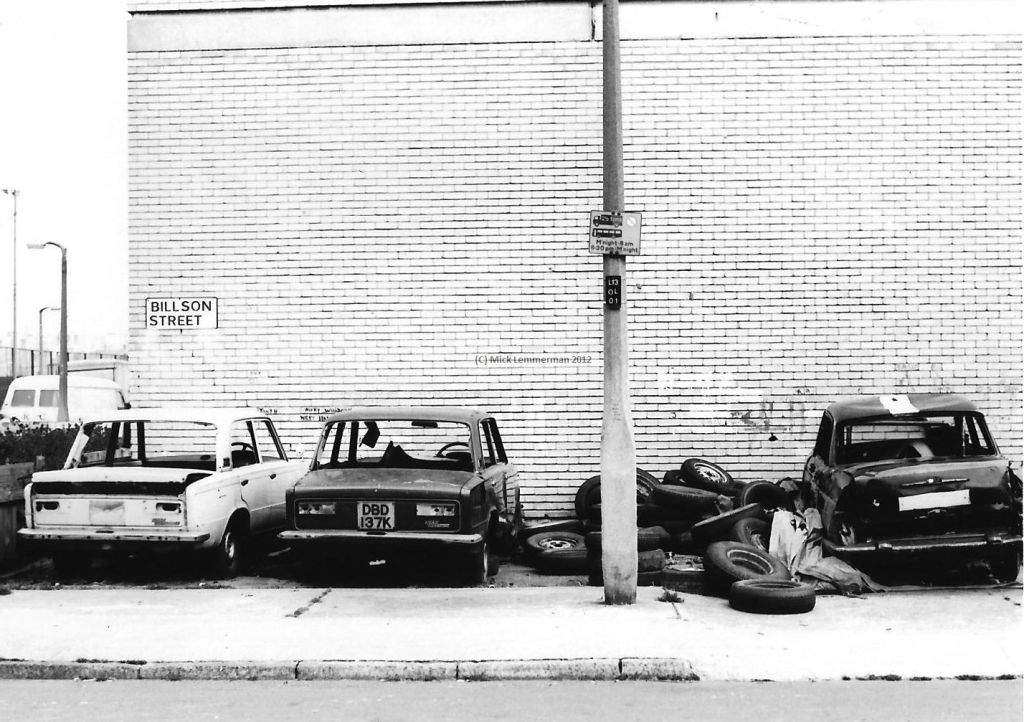
Two examples of people movement on the Isle of Dogs; Sideways and Vertical.
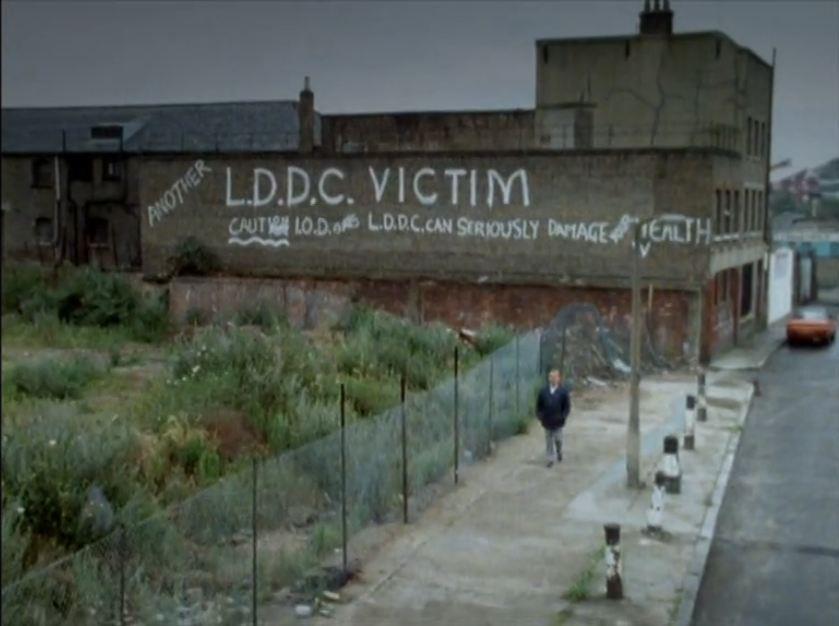
When putting together a presentation concerning a brief history of the Isle of Dogs in the Eastend of London, I stumbled on a 2nd less well known influx during the 1960’s, also promoted by a centralised organisation, but far more inclusive than the later corporate organisation foisted upon the community in 1981, namely The London Docklands Development Corporation (LDDC).
The former was the London County Council (LCC) (later to become the GLC) which derived from the post war housing consensus and in particular the 1947 housing act.
So as with all things, looking a little more deeply into the policy of a pre LDDC government select committee, comments within the paper questioning the new law to be presented to parliament. As with many acts of parliament is has to go through various cross parliamentary committees to scrutinise a controversial bill. This bill was no exception born out a new ideology of Free Market Neoliberal Capitalism as promoted by the Thatcher Government of 1979, from the theories of Friedrich Hayek and Milton Friedman (and the rest of what was known as the ‘Austrian School’).
“This was the first real opportunity to enact the low regulation ring fenced policy centrally governed via unelected quangos on a large scale”.
To say this was a 180 degree shift from the previous economic and social ideology would be no exaggeration. This is born out in the two shifts in the islands population, the first in the 1960’s which I will call a horizontal shift of people, so not strictly Gentrification in the Ruth Glass terminology of the 1960’s and the present day, and a 2nd more seemingly effective solution in the context of monetary value to the area, but not necessarily for the original local population.














 It's about people, stupid...